Friday, September 23, 2011

When Autumn Leaves Start to Gab

Werth: Dear God, I am happy to see you, Wise!

Wise: Did I win the lottery and no one told me?

Werth: No, I'm just feeling reborn with the coming of autumn!

Wise: I thought fall was about things dying.

Werth: It is, but I just feel so much better when the air cools and I stop sweating and people stop wearing filthy flip-flops on the streets of NYC.

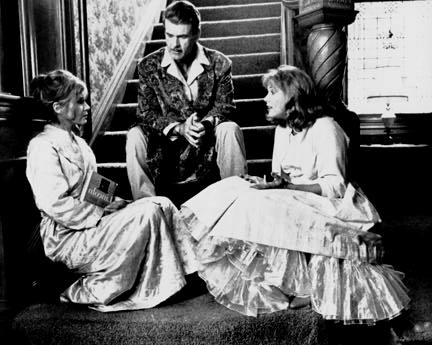
Wise: Fall is also a great setting for movies.  Used effectively, the seasonal explosion of color before the inevitable tumble into winter can greatly enhance the tone of a film.  And few filmmakers have used the brittle, polychromatic perfection of Autumn better than M. Night Shyamalan in The Village (2004).  

Werth: I make it simple and just refer to all of his films as The Twist.

Wise: Set in a 19th century Pennsylvania town, the film dramatizes the the inhabitants' reluctance to interact with the outside world.  Only when Lucius (Joaquin Phoenix) is stabbed by the developmentally disabled Noah (Adrian Brody) over their competing affections for Ivy Walker (Bryce Dallas Howard) do the elders of the town consider allowing Ivy to set off on a journey to procure medical supplies.  

Werth: Where she encounters... The Twist!  

Wise: The film does suffer from Shyamalan's previous success with The Sixth Sense and Unbreakable, and suffered even more when an early draft of the script was leaked online revealing the ending and causing re-shoots of a rejiggered finale.  

Werth: Even The Twist had a Twist.

Wise: But I have to say, despite the slap-dash preposterousness of the climax, this film—moment by moment—is one of my all-time favorites.  Beautifully photographed by Roger Deakins, the costumes and sets are bathed in the ochre, amber and umber of Autumn while the mysterious creatures lurking in the forest are swathed in crimson.  
And the performances are great, too, especially William Hurt as Ivy's father Elder Walker—played to the hilt in full-throttled phlegmatic portentousness—and Sigourney Weaver as Lucius' ferocious mother Alice.  
What I like best, however, about Shyamalan's direction is the intimacy he creates onscreen.  His characters interact in believable ways, and even small moments—like two girls sweeping a porch and making a game of twirling their long, golden skirts—feel effortlessly real.  

Werth: Unlike the mechanical Twist at the end.  

Wise: Sometimes plot just gets in the way of a good film.  

Werth: My favorite fall movie is autumnal in name only. Named solely for the popular Nat King Cole song that opens the movie, Autumn Leaves (1956) is the story of single, Hollywood typist Millie Wetherby who, although she is in the autumn of her years, meets and falls in love with a much younger man who is equally desirous of her.

Wise: Sounds like a charming love story.


Werth: It's directed by Robert Aldrich and stars Joan Crawford.

Wise: I stand corrected.

Werth: Not long after the wedding, Millie discovers that her new, exciting husband Burt (played by the recently passed Cliff Robertson) is a schizophrenic and soon he is terrorizing her with mood swings and typewriters. Burt's ex-wife (Vera Miles) and his father (Lorne Greene) show up to add some oily grift to the proceedings, pushing Millie to the edge. 
Crawford as a terrorized woman is in very comfortable territory here, but Aldrich does something with her that he would later do with Bette Davis in Whatever Happened to Baby Jane (1962). He makes Crawford embrace her age. Crawford was 51 when she shot Autumn Leaves and while she was still a vibrant-looking figure, she captured a sense of loneliness and resignation that comes with realizing that perhaps your best years are behind you which makes the hope presented by Burt all the more thrilling—and then horrifying—when it's snatched away.

Wise: I would be terrified to snatch anything from Joan. 

Werth: But it's not all shattered love and straitjackets, Aldrich still has a flair for camp, and the scene where Millie confronts Burt's ex-wife and father is an all-time quotable. It's not out on DVD, but look for it on Turner Classic Movies, or get a VHS copy and dust-off your VCR. It's perfect for an afternoon spent under a fleece blanket with a cup of warmed apple cider... and your typewriter.

Wise: I'll stick to my computer, which we'll use to post more cinematic insanity next week on Film Gab!

Friday, September 16, 2011

Happy Birthday Bette Joan Perske!

Wise: Howdy, Werth!

Werth: Greetings, Wise!

Wise: What's with the flamethrower?

Werth: I made a cake for Lauren Bacall's birthday and I figured it would be the easiest way to light 87 candles.

Wise: Wow. At her age, she'll need a wind machine to blow them out.

Werth: She'll just pucker up her lips and blow. Bacall is one of the great figures of classic film, and I think we should give her a Film Gab birthday present, and dedicate this week's entry to her.

Wise: Sounds good to me. Beats having to buy her something.

Werth: Bacall first came on the scene with a bang in 1944  in Howard Hawks' To Have and Have Not. She was paired with her future husband Humphrey Bogart and the cinematic sparks flew. The legendary duo made four movies together and their last one is a perfect Sunday afternoon, curl up on your couch classic.

Wise: As opposed to the typical hangover-induced, Domino's binge Sunday couch surfing? 

Werth: Key Largo (1948) is a veritable time capsule of some of the greats of the Hollywood studio system. Bogart is Frank McCloud, a war hero who comes to the Florida Keys to visit the young wife and father of one of his men who was killed in action. Nora (Bacall) and James Temple (the wheeled Lionel Barrymore) are happy to meet the man they've heard so much about and ask him to stay on in their hotel. 
But this bittersweet meeting is made even more bitter when a gang of mobsters led by Johnny Rocco (Edward G. Robinson) decides to take up residence in the hotel. All hell breaks loose when a hurricane hits and traps them all for the duration, pitting Bogart against Robinson in a silver screen titan throwdown.

Wise: I wish Bogart and Robinson had stopped by my place during Hurricane Irene.

Werth: Directed by Bogart friend and collaborator John Huston, Key Largo lacks some of the film noir edge of Huston's Maltese Falcon (1941) and Asphalt Jungle (1950). But in several scenes Huston uses bright light to give the film a grainy, almost verite feel, and some of his closeups eschew Hollywood's typical beauty shots and instead go for craggy realism. But oh what faces! Bacall is beautiful and dumps her typical sly vamp routine for one of a fresh-faced, tender woman whose looks at Bogey are more schoolgirl crush than 40's seductress. Bogey gives the reluctant man of action performance that audiences had come to expect of him, but never tired of. 
Edward G. Robinson is dapper and indomitable playing exiled mobster Johnny Rocco as if he was Napoleon, slapping women, taunting old men and chomping lustily on a cigar. Lionel Barrymore is the most boisterous invalid to ever roll across the screen and he lets loose at Rocco with both barrels, making you wonder if he could get out of that wheelchair what he would do. 

Wise: If he were alive today, probably a second career at Dancing with the Stars.  

Werth: But the real stunner in this already crowded talent pool is Claire Trevor. As the washed-up, drunken gun moll Gaye Dawn, Trevor is a heart-wrenching sensation. Desperately clinging to the bar, Trevor gives a full-bodied, Oscar-winning performance that culminates in a humiliating singing routine for a drink. She leaves us wanting to either throw her a gimlet or rush her to a twelve step program.  
Key Largo is a fun assemblage of performers at the top of their games portraying people who "ain't what they used to be"—as worn-out as the threadbare lobby of the Largo Hotel.

Wise: Or, as worn-out as the 1981 Bertie Higgins song.  At the other end of the spectrum is Bacall's late career supporting role in My Fellow Americans (1996).  A comedy about former rivals and current ex-Presidents Russell P. Kramer (Jack Lemmon) and Matt Douglas (James Garner) as they thwart assassination attempts, unravel Washington skullduggery, and meet the most cheerful, oddball Americans this side of a sit-com's backyard fence.  
Bacall, as former first lady Margaret Kramer, has little to do but gaze adoringly at Lemmon and occasionally crack wise, but she uses all her star power to communicate the brittle dignity forced upon Presidents' wives.  

Werth: Speaking of brittle dignity, I wonder if Nancy Reagan reads Film Gab...

Wise: Also along for the ride are Dan Aykroyd, Wilford Brimley, Sela Ward, Bradley Whitford, and Ester Rolle.  

Werth: It sounds like the cast for a very special episode of Murder, She Wrote.  

Wise: The credits are definitely chock-full of the usual Hollywood suspects, and the script provides each of them with a spicy morsel of scenery to chew.  And while it's not exactly Chekhov—  

Werth: Is Chekov from Star Trek in it too? 

Wise:  —the film is one of the few attempts at imagining life after the White House and the kinds of humiliations ex-Presidents face as they attempt to both keep their dignity and find purpose in the dénouement of their careers.  Of course, those small tragedies are each played for laughs—and often, the broadest, most inane yuks possible—but the film does question the afterlife of public service and the possibility of redemption after a lifetime of political compromises.  

Werth: Speaking of lifetimes—thank you, Lauren Bacall, for a lifetime of movie memories!

Wise: - and bring Nancy Reagan next week for leftover cake and more Film Gab.  

Thursday, September 15, 2011

Daughter Dearest

Werth here. Well folks, Christina Crawford is at it again. As if her tell-all 1978 book Mommie Dearest wasn't enough, Christina is going to do a one-woman show about her life which will include home movies of her mother in the nude. Christina reminds readers that she was indeed an actress. A fact people might not be aware of because she was never successful at it. Christina, bring ME the ax...

Friday, September 9, 2011

Reunited and it Feels So Gab!

Werth: Hello, Wise!

Wise: Werth!  Welcome back from your high school reunion weekend!  How was it seeing your old school chums?  

Werth: On the whole, pretty darned swell. I haven't seen Romy & Michelle's High School Reunion, but I assume my reunion was very similar... only with more Mike's Hard Lemonade—  

Wise: And less Alan Cumming in freaky make-up.  

Werth: Alan Cummings wishes he was in the class of '91. 

Wise: High school reunions have often provided fodder for great films, and one of my all-time favorites is Francis Ford Coppola's Peggy Sue Got Married (1986).  Kathleen Turner plays Peggy Sue, a woman flummoxed by adulthood and by the infidelities of her husband Charlie (Nicolas Cage).  Despite her marriage being in shambles, she decides to attend her 25 year reunion.  After a few awkward encounters with barely recognizable old friends, Peggy is stunned to discover that she has been elected queen of the reunion, but when she ascends the stage to accept the honor, the lights and her confusion cause her to faint.  

Werth: Being married to Nicolas Cage would make anyone pass out.  

Wise: She wakes up only to realize that somehow she has been transported back to her senior year of high school.  At first she thinks she has died, but gradually she realizes that she has been given a second chance at figuring out her life.  She begins by telling off the mean girls in high school and informing her math teacher that she will never, in fact, use algebra ever again.  
Gradually, however, she starts to explore the possibilities her youth had offered but which she never explored until, ultimately, she must decide between the future she knows and the one she doesn't.  

Werth: I'd go for the one without Nicolas Cage.

Wise: The film is full of great performances, most notably Kathleen Turner's Oscar nominated Peggy, but also memorable turns from soon-to-be stars like Helen Hunt, Joan Allen, and Jim Carey, as well as established stars like Barbara Harris as Peggy's mother.  But the two most touching performances come from Leon Ames and Maureen O'Sullivan as Peggy's grandparents.  These stalwarts from the Golden Age of Hollywood both ground the film's emotions and allow for the supernatural flights of fancy that make the film's slippery chronology possible.  

Werth: Speaking of slippery, did Maureen wear her Jane costume?

Wise: Part of what makes Peggy Sue Got Married so moving is that it doesn't simply cater to nerd revenge fantasies or romantic pipe dreams; instead, the film is a meditation on the passage of time and the consequences of small decisions as they reverberate throughout the years. 

Werth: The consequences of a reunion are more deadly in the thriller, Thirteen Women (1932). Laura Stanhope (Irene Dunne) sends out a call to some of her old girl-schoolmates for a reunion dinner in Los Angeles. This gathering is not just an opportunity to catch up on lost time or to see how fat everyone's gotten. These women have all been getting their horoscopes mailed to them by renowned astrologer Swami Yogadachi, but recently "you will meet a dark stranger" has turned into "buy a funeral plot."

Wise: At least he didn't bake cyanide tablets into fortune cookies. 

Werth: Three friends have already been affected by these miserable missives and wound up dead or locked up. Laura hopes to convince her remaining friends that it's all hogwash, but when someone tries to poison her only son, she starts to get the heebie jeebies. As girlfriends and the swami himself drop like flies, it becomes obvious that someone else is looking into the crystal ball. And it is none other than former Eurasian classmate, Ursula Georgy (Myrna Loy). For Ursula, revenge for the "half-breed" taunting she received in school is a dish best served in your horoscope.

Wise: I'll take my Sagittarius extra spicy with a side of sticky rice. 

Werth: 1932 was a very Asian year for Loy because she was also cast as diabolical Fah Lo See in The Mask of Fu Manchu. Myrna Adele Williams was as whitebread as her birthplace in Montana, but somehow the studio contrived ways of turning her into an Asian femme fatale—and Loy made the most of it. 
In Thirteen Girls she is lithe in form-fitting, exotic gowns with eyes that are both wicked, sexy and pitiless. Like a cobra she glides into the lives of those she wants to manipulate, literally hypnotizing and using them to fulfill her righteous rage at these privileged girls who teased her mercilessly. 

Wise:Was this the prototype for Gossip Girl? 

Werth: While it sounds racially campy that the same woman who played Nora Charles is also portraying a "Hindu dame," Loy made Ursula poised and elegant without a silly accent or exaggerated mannerisms. It makes one wonder if young producer David O. Selznick could have re-imagined the character from Tiffany Thayer's "startling" book, dumped the race-baiting plotline and just let Loy be an evil white lady with a private school axe to grind.

Wise: But then she wouldn't get to wear all that dark eyeliner.

Werth: True. But as it is, Loy (and the always earth-ily charming Irene Dunne) make the silly plot of Thirteen Women a reunion worth going to.

Wise: I notice that Thirteen Women isn't available on DVD.

Werth: Perhaps by the time I go to another high school reunion it will be.

Wise: Luckily our readers will only have to wait a week to be reunited with the next edition of Film Gab!


Friday, September 2, 2011

Film Gab's End of Summer Flick-Nic!

Werth: Howdy, Wise.

Wise: Oh, hello, Werth. What's in the bag?

Werth: Just all my back-to-school supplies: notebooks, pens, pencils, erasers, a thermos full of chardonnay.

Wise: I hope you'll be putting that thermos to good use before heading off to class. It's Labor Day Weekend and your last chance for a picnic this summer.

Weth: Picnics are lovely- But picnic movies have all the fun of picnics without the ants. What movie brings to mind blankets, baskets and cold-cuts for you?

Wise: Based on Robert Anderson's 1952 Broadway hit, Tea and Sympathy (1956) details the teasing and bullying suffered by 17-year-old Tom Lee (John Kerr) whose un-masculine habits make him the butt of jokes at his prep school. The boys call him "sister boy," and even his father taunts him for not getting along with the guys. Eventually, his house master's wife, Laura Reynolds (Deborah Kerr), takes notice of his plight, and after his agony reaches a crisis, she takes him on a picnic and offers herself to teach him how to be a man.


Werth: That's going to be a long picnic...

Wise: Exactly. Directed by Vincente Minnelli and filmed in his typically florid style, the movie suggests that Tom's passion for tennis, classical music and sewing are as arid as his beige wardrobe. Laura on the other hand- dressed in lush greens, yellows and peach- is fully ripe and waiting to be plucked now that her stolid husband seems to prefer the company of his male students to her.

Werth: I'm surprised the boys don't call him "sister teacher."

Wise: Minnelli himself was the object of much Hollywood gossip because he was rumored to wear make-up and to have had a live-in boyfriend during his days in New York. Once in Hollywood, he married four times and yet he was still the epitome of many people's idea of effeminate.

Werth: Minnelli's sexuality (and whether it even matters) has been a hotly contested debate. But one thing is certain, he sure put the tinsel in Tinseltown.

Wise: Many students of film have tried to extract a coherent statement on Minnelli's sexuality by reading the clues he inserted in Tea and Sympathy, but I think the film is too enigmatic to say anything definitive. Further clouding the issue is the frame story of grown and happily heterosexual Tom looking back at his confused youth that the studio tacked on to satisfy the Production Code. Despite this prim veneer, the film's subtexts of "queerness," masculinity and desire remain deeply compelling.

Werth: Well, dear Wise, I see your gay-ish picnic and raise you a Labor Day in my picnic flick pick, 1957's The Pajama Game. Doris Day and John Raitt (Bonnie's pappy) star in what could best be called the 1950's musical attempt to deal with the labor conflict in America through a company picnic. If that sounds ridiculous- that's because it is. The film opens with the workers at the Sleeptite Pajama Factory stitching in time to "Racing the Clock" without the 7 1/2 cent raise they asked for.

Werth: Those unions are so demanding.

Wise: Owner Myron Hasler (Ralph Dunn) is the typical big-coiffed capitalist pig who tells new superintendent Sid Sorokin (Raitt) to keep the girls working- no matter what. That becomes more difficult for Sid as he falls for troublemaker and head of the "Grievance Committee," Babe Williams (Day). 
Their labor vs. the man tussling becomes a roll in the hay, however, at the company picnic where singing, dancing and drunken knife throwing bring both sides of the labor dispute (and several co-workers) together.

Wise: Couldn't they have accomplished the same thing with fried chicken and blueberry pies?

Werth: Directed by 1950's musical maestros Stanley Donan and George Abbott, much of Pajama Game resembles its Broadway stage predecessor. "I'm Not At All in Love" and "7 1/2 Cents" are traditionally staged group numbers while the standard hit "Hey There" gets the sweet solo screen treatment from both Raitt and Day. Their duet, "There Once Was a Man," while energetic, seems static on the front lawn and steps of Babe's house- perhaps a holdover from its stage blocking. 
But choreographer Bob Fosse was working on a new form of musical expression, and we see the first inklings of it in the picnic scene number, "Once-A-Year-Day!" Seemingly improvised running and jumping takes on the form of modern, choreographed movement and soon Gladys Hotchkiss (Carol Haney) is leading the crowd with wild, acrobatic, joyful motion that looks less like a structured dance number and more like an orgiastic thrill ride.

Wise: I often do cartwheels for a really delicious potato salad.

Werth: And the picnic is just the appetizer. At the reunion rally, Gladys performs with two back-up dancers (Buzz Miller and Eddie Phillips) in the iconic "Steam Heat." Clapping and stomping, hats, hands, knees and body angles. Here we catch glimpses of Fosse's future dance style that would change the American musical with shows like Sweet Charity (1969) and Cabaret (1972). 
Don't get me wrong, though. The classical elements of this musical are worth watching too. Richard Adler and Jerry Ross' tunes are catchy and Doris Day shines as the sensible gal whose no-nonsense exterior barely conceals the passionate gooey center just waiting to be released.

Wise: Are we still talking about picnics?

Werth: And Haney is a sensation, playing Gladys like a limber, smoky Pete Puma who lures Sid (and us) into the matchlit delights of Hernando's Hideaway before she passes out from too much gin- or perhaps it was an overdose of the bright Warner Color that infuses every frame. Even if you don't buy the "love can solve anything- even a vicious labor dispute" premise, Pajama Game is a fun time that won't put you to sleep.

Wise: Excellent work, Werth. I'm certainly feeling pleasantly full of cinematic delights.

Werth: Make sure you leave some room in your basket for next week's Film Gab!