Friday, April 1, 2011

April Gab’s Day!

Werth: Hey, Wise!

Wise: Hey, Werth!

Werth: I just got a message from Olivia de Havilland’s agent and she is so impressed by our blog that she AND her sister, Joan Fontaine, want to do an interview with us!

Wise: Jiminy Crickets! That’s amazing! I can’t wait—

Werth: April Fool’s!

Wise: I hate you.

Werth: I can’t believe you fell for that. Everyone knows that Olivia and Joan don’t speak to each other.

Wise: Kind of like us after this blog?  

Werth: You’ll regain your sense of humor after I talk about my favorite fool-full flick, Murder by Death!

Wise: An appropriate title for what I’m thinking about right now.

Werth: Murder by Death is the 1976 comedy that spoofs all those crime-solving characters from literature and film. Famed TV and theater writer Neil Simon pokes fun at such mystery mainstays as Sam Spade, Nick and Nora Charles, Hercule Poirot, Miss Marple and Charlie Chan. The world’s greatest detectives have been invited to a mysterious manse to solve a murder that will  be committed at midnight. Or will it...?

Wise: I don’t know. Do I look like Jessica Fletcher?

Werth: A little around the mouth. Anyway, these silly sleuths attempt to find out who killed who in order to win a million dollars—and to survive the night.

Wise: Sounds like Clue.

Werth: There are definite similarities (including Eileen Brennan starring in both), but Murder by Death came first. Murder’s cast is a veritable who’s who of actors who excel at scenery chewing: Peter Falk, the aforementioned Eileen Brennan, James Coco, Nancy Walker, David Niven, Maggie Smith, Elsa Lanchester and in a piece of inspired Yunioshi casting, Peter Sellers as that Far East flat foot, Sidney Wang.

Wise: Do all your favorite movies have offensive Asian stereotypes?   

Werth: What’s even more amusing are the comic turns by normally dramatic Alec Guinness as befuddled, blind butler Bensonmum and author turned caricature 
Truman Capote as the evil mastermind Lionel Twain. Even young James Cromwell plays a Belgian smart-mouth chauffeur. With Simon’s characteristic joke and pun-laden dialogue, there’s no reason for Murder by Death to have a challenging mystery. Most viewers will just be happy with the octogenarian fart-jokes gleefully burbled by eternally aged Estelle Winwood as Nurse Withers.

Wise: A fool’s paradise.

Werth: Has your mood improved enough to tell us your favorite silly cinema?

Wise: Oh, you know how I love to suffer fools gladly.  Especially when they’re in a movie as hilarious as Wet Hot American Summer.  Directed by David Wain and featuring the alumni of the comedy troupe, The State, the film is bursting with an almost embarrassing amount of talent: Molly Shannon, David Hyde Pierce, Amy Poehler, Janeane Garofalo, Paul Rudd, Michael Showalter, Michael Ian Black, and Bradley Cooper.  

Werth: Before he served his time as Renee Zellweger’s arm candy?  

Wise: It also showcases a fully committed and fully absurd cameo from Law & Order’s Christopher Meloni as a Vietnam vet camp cook who speaks to a can of mixed vegetables and has romantic designs on a mustard-colored, side-by-side refrigerator.   

Werth: Do all your favorite movies have offensive Vietnam vet stereotypes?  

Wise: The movie barely made it to theaters when it was released in 2001, but it has since become a cult classic.  Ostensibly, it’s a parody of summer camp movies from the early 80’s, and while it does tinker with the likes of Meatballs and its ilk, there are moments inspired by The Bad News Bears, The Breakfast Club, and Serpico

Werth: Serpico’s Bad News Meatball Breakfast?
  
Wise: It’s definitely not a Noel Coward drawing room comedy, but the surreal humor and the enthusiastic cast make it a real gut buster.  Plus the finale includes a hilarious musical tribute to Joan Crawford’s most memorable work.  

Werth: What?! Don’t tell me they do some sort of disrespectful, drag-queen Mommie Dearest shenanigans! Cause I don’t think that’s funny!

Wise: April Fool!

Werth: God, that revenge dish was served cold!

Werth: We’ll warm it up next week with a fresh plate of Film Gab.  

Tuesday, March 29, 2011

Big Screen in the Sky

Actor Farley Granger died yesterday in Manhattan at age 85. Granger came to prominence in 1948 in Alfred Hitchcock's disturbing re-telling of the Leopold and Loeb murder case, Rope. Legendary for its camerawork (it was composed of just ten shots) Rope also was noteworthy for its homosexual murderous duo. While Granger nor his co-star John Dall ever speak of the love that dare not speak its name, the film sizzles with an underlying attraction and dependence between the two young men. Hitchcock would use Granger again in the center of a strange mano-a-mano pairing in 1951's Strangers on a Train. In Strangers, Granger strikes up a bizarre relationship with Robert Walker when Walker's sociopathic, and strangely effete character takes Granger up on an offer to kill someone for him. Granger is surprised to learn that a conversation he thought was simply a lark becomes a deadly case of prid pro quo. As with Rope, there is an underlying tone of homosexuality, that if fully expressed would have doomed the movie's script to the garbage can. But thanks in good part to Granger's performances, the subtexts can be read and enjoyed by those who wanted to read between the lines. It probably didn't hurt that Granger was a self-professed bi-sexual who wooed the likes of Shelley Winters, Leonard Bernstein and Arthur Laurents. While not necessarily out and proud, Granger certainly gave a face to a different kind of male lead in 1940's Hollywood.

Friday, March 25, 2011

Re-Maker's Mark

Werth: Say, Wise?

Wise: Yes, Werth?
Werth: Which of us is going to call our cable operator to subscribe to HBO so we can watch the new mini-series version of Mildred Pierce?

Wise: I assumed you were going to boycott it because they didn’t CGI Joan Crawford into it.

Werth: Well... as good as Joan would be in the new version, I am confident that Todd Haynes is going to do a beautiful job on it.

Wise: Beautiful—but not better?


Werth: Oh I’d never go that far. First of all, I don’t think that these two projects should even be compared. They are from two TOTALLY different eras and directorial styles and, to be honest, Haynes is going to be more faithful to the James M. Cain novel that was the source material for both films. Secondly, the original 1945 Mildred Pierce is a masterwork of filmmaking and performance that casts a long and unmatchable shadow.

Wise: Kate Winslet has big eyebrows to fill.

Werth: Exactly. When shooting began on Mildred Pierce in December of 1944, the film’s star, Joan Crawford, was in a very precarious position. Her reign as the queen of MGM had unceremoniously concluded a year earlier because she had been labeled box-office poison and even worse, she was approaching Tinseltown’s unacceptable feminine age of forty.

Wise: You’re going to be unacceptable soon.

Werth: Hopefully blogs are more forgiving than Hollywood. Crawford signed a deal with rival studio Warner Brothers and waited for the script offer that she hoped would put her back on top of the Hollywood heap. Crawford read Mildred Pierce and saw her opportunity, but director Michael Curtiz was initially not so keen on working with the notorious diva. He even made her audition for the part. Legend has it he ripped the shoulders of her dress from her body as he railed against shoulder pads, only to find, those were Crawford’s actual shoulders.

Wise: Curtiz would have hated 80’s fashions.

Werth: Despite Curtz’s initial doubts, after seeing the film it’s impossible to imagine anyone but Crawford in the role. Mildred Pierce tells the story of a hard-working, single mother who busts her hump as a waitress while climbing the rungs of the culinary ladder to success—all so she can provide everything she didn’t have for her daughter Veda. Played by actress Ann Blythe, Veda is like a tall, cool glass of acid. The ultimate social climber, Veda wants the finer things in life and is willing to step on anyone to achieve them, even if that means trading bitchslaps with her blindly adoring mother.

Wise: I'm gonna name my first baby Bitchslap.  

Werth: Curtiz expertly blended the drama of a woman’s film with the visual styling and plot of film noir (there were no murders in Cain’s novel). The film plays a riveting tennis game between the past’s bright, sunlit kitchens and the present’s starkly shadowed police station and is full of wonderful volleying from Blythe, slimy Jack Carson and fresh as paint Eve Arden. But without a doubt, the titan that stands out in this film is Crawford. She often played determined, come-from-nowhere shopgirls who had to fight their way to the top with nothing but raw ambition—

Wise:  After all, that was how Lucille LeSueur became Joan Crawford.

Werth: But something about this role is different. Crawford added nuances of vulnerability, naive motherly love, and worldly regret that made Mildred a complex and unique film character. She wasn’t just a bitch. She was a victim of social constraints and her own myopic love for her daughter. No matter how many critics, historians and feminists write about this role, Crawford defies easy definitions of the Post-WW II woman. There she stands on the steps of the courthouse at the end of the picture, a symbol of failure and possibility. Getting the last laugh at “box-office poison,” Crawford won the Academy Award for Best Actress that year and kick-started another fruitful period in her career.

Wise: You might say that Todd Haynes’ Mildred Pierce is a re-make of a movie that re-made Joan Crawford.

Werth: I’m guessing that’s your intricate segue into your favorite re-made movie.

Wise: I do love elaborate transitions, especially this week when I’m not just talking about one re-make, but two, plus the play that the original film was based on.  So it’s almost like a re-make to the fourth power.  

Werth: I might need a drink just to understand that. 

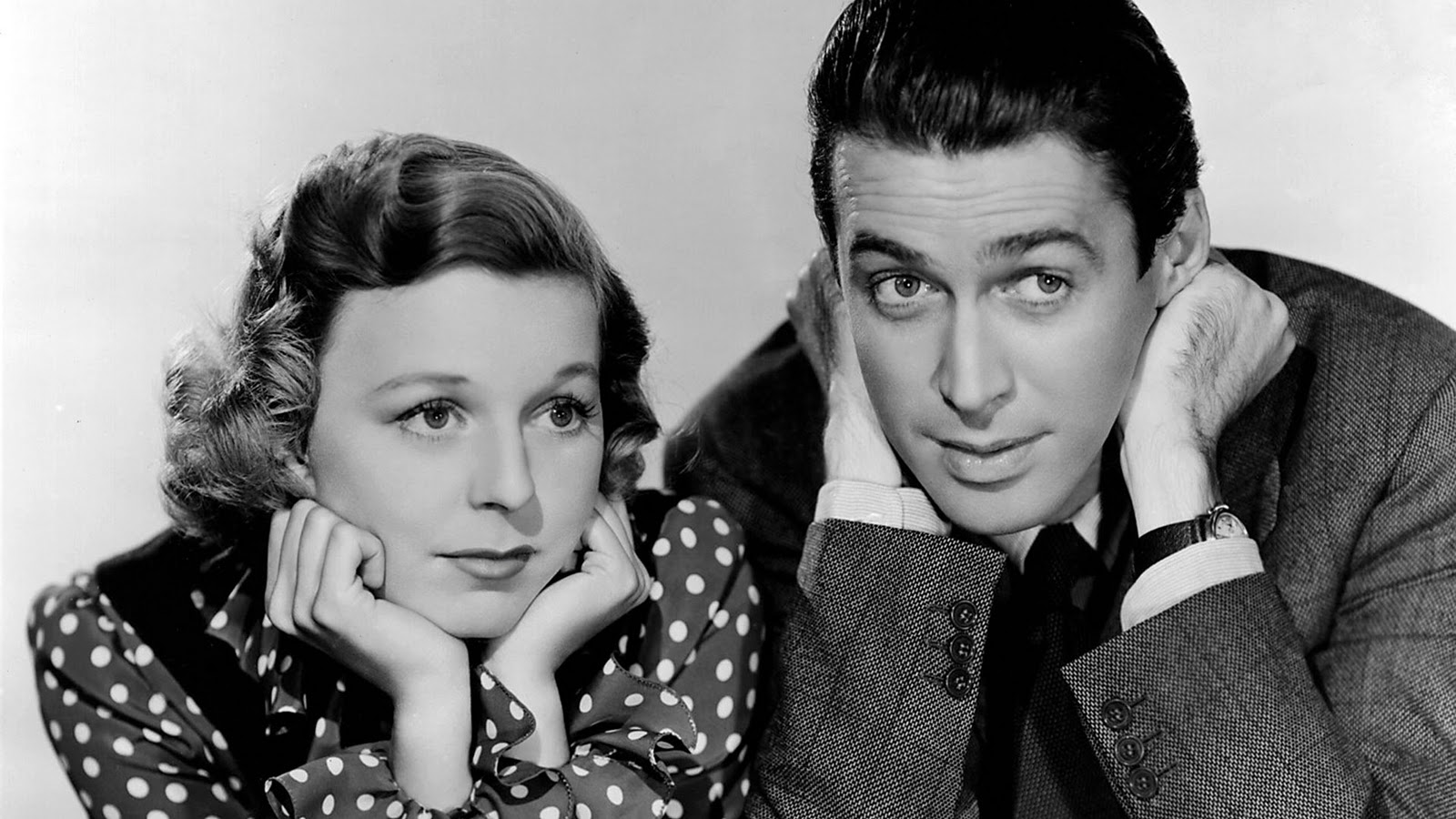
Wise: Me too.  But let’s try to figure this out together.  First there was 1940’s The Shop Around the Corner with James Stewart and Margaret Sullavan, directed by Ernst Lubitsch from a Hungarian play called Parfumerie.  Nine years later it became a musical vehicle for Judy Garland and Van Johnson called In the Good Old Summertime directed by Robert Z. Leonard.  Finally, in 1998, it became You’ve Got Mail directed by Nora Ephron and starring Tom Hanks and Meg Ryan. 


Werth: The ending of You’ve Got Mail literally caused me to stand up in the theater and shout out to Meg Ryan, “Stab him!”

Wise: While The Shop Around the Corner and In the Good Old Summertime share more plot points, all three films focus on the central couple who secretly exchange anonymous love letters while they unknowingly bicker with each other in their everyday lives.  What’s so interesting, though, is that despite the similarities, all three of these movies are decidedly different and they each showcase their stars in wildly different ways.  

Werth: Which is a big contrast to Mildred Pierce because no matter how great Kate Winslet is in the role—and I don’t doubt she will be—she’ll never be synonymous with the part the way Joan
Crawford is. 

Wise: Exactly.  The Shop Around the Corner is a rueful film, something of a love letter itself to the charms of European life that were rapidly disappearing under the heels of the Nazis during WWII.  Stewart and Sullavan both give tender, elegant performances under Lubitsch’s direction while preserving an undercurrent of bleakness that suggested that even the most star-crossed lovers had a chance of missing one another.  

Werth: Like me and Hugh Jackman.

Wise: Summertime has a much more rollicking tone.  Judy belts out some tender and fun numbers, all while keeping an eye on Johnson’s flimfalmmery.  It also features a fantastic tumble from the prince of silent pratfalls, Buster Keaton, the sweetly amusing love story between Spring Byington and S.Z. “Cuddles” Sakall, plus the screen debut of three-year-old Liza Minnelli.  

Werth: I’m surprised she didn’t get her own number.  

Wise: You’ve Got Mail was the third onscreen pairing of Ryan and Hanks and a lot of the plot simply vanishes to make room for their patented, and very marketable, sparring, and yet it shares a certain melancholy with Lubitsch’s original film.  Ephron gives a plum role to New York’s Upper West Side, bathing it in golden light and lamenting the loss of its neighborhood feel.  Ephron even does the unthinkable by closing the central shop, Ryan’s bookstore for children, even though the gift shop in Around the Corner and the music store in Summertime both survive.  


Werth: It’s a tough world out there for bookstores... and books.

Wise: What makes up for it, in my mind at least, is the fact that life-long Oz fan Ephron prominently features a number of L. Frank Baum’s books in the set design.  

Werth: I knew you’d bring it back to Oz somehow.  

Wise: Does this mean you don’t want to hear about the planned Wizard of Oz remake?

Werth: Let’s save that for when we re-make Film Gab next week.

Wednesday, March 23, 2011

Goodnight Sweet Liz

Today here at Film Gab we hang our heads at the passing of a legend. Elizabeth Taylor will be eulogized today in just about every possible newspaper, e-mail and blog posting because she was the embodiment of that rare creature we call a "Moviestar." From her days as a young starlet at MGM in films like National Velvet (1944) to her more mature roles in films like Who's Afraid of Virginia Woolf? (1966), Taylor was more than just a beautiful woman. She was an actress with a passionate desire to grow and develop. Not content to just be a "violet-eyed beauty", Taylor made dynamic and powerful film role choices that earned her five Academy Award nominations and two wins. That passion spilled over into her personal life causing headlines around the world when affairs and marriages erupted, sometimes tranishing her reputation, but more often than not, simply adding to her glamour and allure. As her film career faded, Taylor did not sit idly by. She became one of the first outspoken AIDS activists, giving a public voice to a disease that many others were trying to hide. Taylor lived a full life- the kind she might have portrayed on screen. And we are grateful for every moment of it.

Friday, March 18, 2011

12 Step Gab

Wise: Hi there, Werth!

Werth: Please, stop typing so loud.

Wise: Did someone celebrate his faux Irish heritage too much last night?

Werth: There’s some Irish on my Grandfather’s side... and yes.

Wise: You know the best cure for a hangover?

Werth: Four Tylenol washed down with a fifth of Cointreau?


Wise: Alcoholic Movies!

Werth: Ah! The hair of the Hollywood that bit you.

Wise: Indeed. When I’m getting my fix of over-imbibing on the silver screen, I like to serve it dry with a twist of old Hollywood glamor and a splash of 80’s bitters.  

Werth: Sounds like you’re going to dunk Joan Collins’ “Dynasty” shoulder pads into a mug of Old Grandad. 

Wise: Close, but actually I’m thinking of Postcards from the Edge, Mike Nichols’ film version of Carrie Fisher’s thinly veiled roman a clef about the excesses of an actress as she struggles with addictions, a turbulent love life, and the unending and unhelpful razzmatazz of her screen legend mother.  

Werth: Razzmatazz that will drive a body straight to Jenny Craig.

Wise: Meryl Streep plays Suzanne Vale, an effervescent actress with a few hits under her belt and a few bumps up her nose.  After a stint in rehab, and before the insurance company will allow her to start her next film, she moves in with her mother and is forced to negotiate both her recovery and her complicated maternal relationship.  Of course that relationship is even more difficult when your mother is played by Shirley MacLaine in Debbie Reynolds drag.  

Werth: That would make a great Halloween costume. 

Wise: Postcards isn’t a perfect film, but it is loaded with great performances and some genuinely funny jokes made at Hollywood’s expense.  Annette Bening, Richard Dreyfuss, and Gene Hackman all have small but pivotal roles, and their presence gives the movie a kind of insider-y feel.  It’s fun to watch the fictional world of movie-making bleed into Suzanne’s real life, just like it’s fun to play a guessing game of how much of the story is based on Carrie Fisher’s own experiences.  


Werth: I liked seeing Conrad Bain get some post-“Diff’rent Strokes” work.

Wise: Both Streep and MacLaine get to sing a couple of numbers which adds extra zest to the affair.  Plus Dennis Quaid does a lot of shirtless smirking while causing a lot of trouble for Suzanne.  He’s at the height of the golden, good-time boy era of his career and he cheerfully lures Suzanne into and out of the bedroom before eventually dumping her at the emergency room after an overdose.  

Werth: I find that the best way to cure a Dennis Quaid overdose is to hit rock-bottom with the drunkenly delightful Dudley Moore in 1981’s Arthur.

Wise: Not to be confused with the Russell Brand re-make that comes out April 8th.

Werth: Of course not. Arthur is a wealthy, lovable, ne’er-do-well lush who spends his nights at the Plaza eating dinner with lycra-clad street walkers and his days waking up in a bedroom with a trainset.
After taking a bath wearing a top hat, he can be found traipsing through New York department stores with his British-ly acerbic manservant, Hobson, played with hilarious elan by the Oscar-winning John Gielgud.
 

Wise: Isn’t that how you spend your days?

Werth: Just Saturdays. Arthur’s boozey life gets a wake-up call from his father, however, when he is told he has to marry heiress Susan Johnson (a pre- L.A. Law Jill Eikenberry) or be written off without a sou. 


Wise: There are worse things than marrying an heiress. 

Werth: Only Arthur has just found love in the Bergdorf’s tie department care of sassy shoplifter, Liza Minnelli.

Wise: What’s a drunk millionaire to do?

 Werth: What really makes this movie work is its total devotion to its lead character. Dudley Moore waltzes effortlessly across the screen as a winsome drunk. His pathetic-ness is charming, his social faux pas endearing, his care and love for Hobson heart-touching. The film doesn’t make us pity Arthur’s drunkenness. In fact, we wait anxiously for his next bender. But it also doesn’t glorify his drinking problem. As grand a caricature as Arthur is, he feels utterly human. And with spot-on supporting performances from Gielgud, Minnelli, Barney Martin and Geraldine Fizgerald, Arthur’s life doesn’t make us want to run to an AA Meeting, but to the arms of someone we love.

Wise: It sounds like you got caught between the moon and New York City.

Werth: And if any theme song could give you a hangover, Christopher Cross’ could.

Wise: No worries. You and our faithful readers can just put an ice pack on your heads and tune in next week for more intoxicating Film Gab!


Thursday, March 17, 2011

The Big Screen in the Sky

Film Gab has just learned that British actor Michael Gough has passed. Most popularly known for his role as  Alfred Pennyworth, the loyal manservant to Bruce Wayne in the Tim Burton Batman re-vamps, Gough was also a mainstay of English B-horror films (some might say C or D films) of the 60's and 70's. Gough could be seen snarling and being angrily British in such cult classics as Konga (1961), Berserk (1967) and Trog (1970) (the two latter films with the equally snarly and angry Joan Crawford). When you can hold your own opposite a giant ape, a prehistoric man and Joan Crawford, you deserve a seat in Heaven. Gough was 94.

Wednesday, March 16, 2011

Objects Lesson

Have you ever thought to yourself, "Hey, I wish I could combine my knowledge of objects from classic films with a Wheel-of-Fortune-like web game"? Well if so, the folks at Famous Objects From Classic Movies have read your mind. Whether you want to test your knowledge or just kill some time while "working", this game will grow on you.
Special shout-out to Film Gab fan Patrick Connolly for suggesting this site for our readers!