Film Gab is saddened to hear of the death of film critic extraordinaire Judith Crist. One of the most influential reviewers of the second half of the twentieth century, she was also the first woman to serve full-time as critic for a major daily paper (The New York Herald Tribune). For twenty-two years she wrote reviews for TV Guide, reaching twenty million readers each week, and logged a decade at The Today Show where she became a major voice during some of the most tumultuous years in Hollywood.
Never one to mince words when a film failed to meet her approval, she famously called The Sound of Music "Icky-sticky" and suggested that the film's audiences weren't "up to the stinging sophistication and biting wit of Mary Poppins."
Still, Crist was never one to incite the wrath of her fellow critics, preferring to address her readers rather than engage in the bloviations that could distract from the movies themselves. Her voice was always sharp, her insights actually insightful, and her legacy lives on among all of us who gab about film.
Oscar-winning composer and sometimes actor Marvin Hamlisch has passed away in Los Angeles. Hamlisch was best known for writing themes that seeped into the public consciousness—whether we wanted to admit it or not. Starting out in television in th early '60's, Hamlisch quickly showed his ability to grab pop melodies that stuck in your head with the stickily-sweet "Sunshine, Lollipops and Rainbows" from the film Ski Party (1965). But Hamlisch would soon enter the big leagues by working on music for Woody Allen in Take the Money and Run (1969) and Bananas (1971).

He would earn his first Oscar nom for the film Kotch in 1971 and in 1973 earned three Oscars for his work on The Sting and The Way We Were. It was impossible that year not to have "The Entertainer" (written by Scott Joplin) or "The Way We Were" reverberating through your head. Eight Oscar noms followed as well as the Broadway insider classic A Chorus Line (1985). Love his music or hate it, Hamlisch achieved a level of success in film by composing songs that struck a chord and ingrained themselves in the pop culture. I wonder if Saint Peter will request to hear the Ice Castles Theme...
Werth here. Werth & Wise would like to take a moment on this, the 50th anniversary of her death to give a toast to Marilyn Monroe. Seeing her for the first time in Gentlemen Prefer Blondes (1953) was like a first sip of cinematic champagne and I've been chug-a-lugging from the bottle ever since. Blondes not only introduced me to Marilyn's talent and beauty, but she became a gateway drug to the world of classic cinema that has given me so many reasons to laugh, cry and get snippy. So here's to you, Marilyn. You are eternal. For a lovely photo review of Monroe's career, check out the photo archives at Life.com.
Wise: Hello, Werth.
Werth: Bonjour, mon gabber. Comment ça va?
Wise: I think you have some croissant stuck in your teeth.
Werth: No, I just saw Wes Anderson's Moonrise Kingdom.
Wise: In French?
Werth: I was just struck by how stylistic Wes Anderson's work is, and how he could be considered a modern auteur director.
Wise: And since French critics like Francois Truffaut came up with the auteur theory in the 1950's, you started speaking Gallic-ly.
Werth: Très bien. While not everyone buys into the auteur theory (yes, Pauline Kael, I'm talking about you), what Truffaut and his ilk sought to do was to discuss certain directors' bodies of work by highlighting the visual and stylistic similarities in their films. Originally they used the auteur theory to define Hitchcock, Hawks, Kurosawa and others.
Wise: But the theory works equally well with contemporary directors, many of whom were just as influenced by the Cahiers du Cinéma crowd as they were the films they discussed.
For instance, Ang Lee who has genre-jumped memorably throughout his career— the domestic drama of The Ice Storm (1997); screwball mix-ups in The Wedding Banquet (1993); martial arts thrills in Crouching Tiger, Hidden Dragon (2000); and even superhero blockbuster Hulk (2003)—still puts his stylistic stamp on everything he does.
Werth: I'm just glad he got Heath and Jake naked in Brokeback Mountain (2005).
Wise: While Lee's films are all deeply interested in character, I'd say that his style is most evident in the careful way he uses image to communicate the delicate balance between reason and emotion. And nowhere is that more evident than in his adaptation of Jane Austen's Sense and Sensibility (1995). Working from an Oscar-winning script written by his star Emma Thompson, Lee takes Austen's premise of two sisters and their very different love affairs and uses it to explore his own fascination with estrangement and constraint and the ways in which they both can be shattered by passion.
Werth: And bonnets. Lots of bonnets.
Wise: Banished from their home by the vagaries of British entitlement, sisters Elinor (Thompson) and Marianne (Kate Winslet) Dashwood retire to a remote cottage with their mother and younger sister Margaret. The seclusion only heightens the sisters' natural tendencies—Elinor to circumspection; Marianne to passion—and colors their interactions with potential suitors.
Werth: Although sadly there is no gravity-defying, kung fu swordplay.
Wise: The film is full of dualities: will Marianne choose the dashing Willoughby (a very sexy Greg Wise) or the more restrained Colonel Brandon (Alan Rickman)?; will Elinor rely on decorum or will she toss it aside in pursuit of true love (a remarkably stutter-free Hugh Grant)? Lee delights in these choices and dramatizes them onscreen.
He and cinematographer Michael Coulter carefully compose each shot, but often disrupt the harmony with turbulence, whether with a fluttering curtain, a jagged hedgerow, or Marianne's frantic dash across the hillside. While seeming unobtrusive, his camera moves pointedly reveal character, confining Elinor's suffering to a corner of the frame while Marianne's theatrics devour the screen.
But perhaps most characteristic of Lee's work is his use of the sky—rumor persists that he insisted on expensive CGI clouds to perfect a single shot—to express his characters' aspirations and to signal the emotional tenor of a scene. His sensitivity, tempered by rationality, infuses each of his films with not only a distinctive look, but also a set of themes that makes his work instantly recognizable and deeply personal.

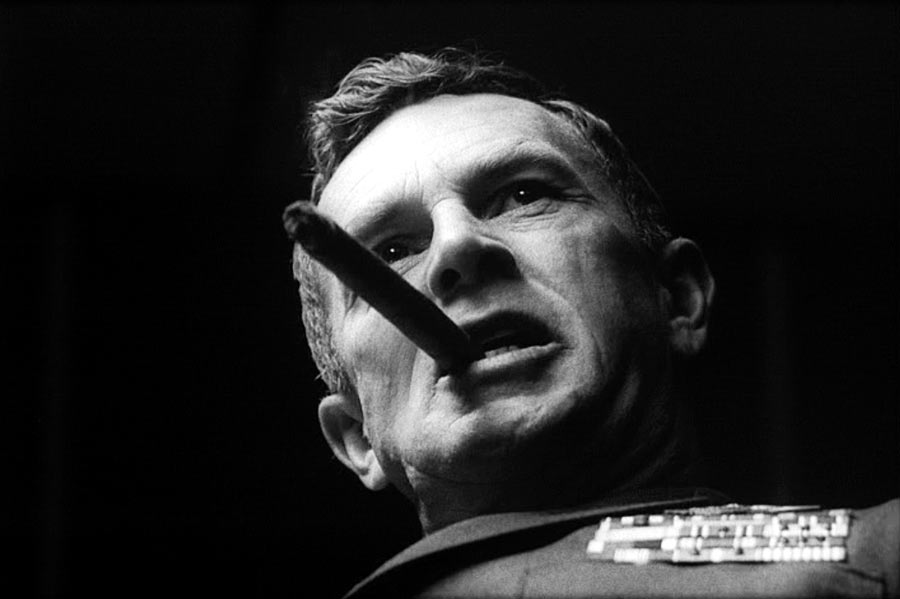
Werth: A director that many consider to be a good candidate for auteur status is Stanley Kubrick. Throughout a wide range of film genres, Kubrick's films have a distinct visual style and viewpoint that make his work unmistakeable. One of his most popular films is 1964's long-titled Dr. Strangelove: Or How I Learned to Stop Worrying and Love the Bomb. Originally conceived as a thriller based on Peter George's Red Alert, Kubrick's re-writes of the script kept getting funnier and funnier. So he decided that the best way to communicate his dark theme of nuclear detente was through satire, and, with writer Terry Southern's help, he soon had a hilarious dark comedy script to shoot.
Wise: I wonder if Battleship began as a thoughtful examination of nuclear responsibility?
Werth: A crazed general trips an alarm sending U.S. bombers to drop nukes on Russia starting a domino effect that insures the destruction of both countries and the world. Now just reading the plot, it's hard to find anything funny about it, but all one has to do is look at some of the character names to know that this movie has a wicked sense of humor.
Peter Sellers masterfully improvises three characters: Group Captain Lionel Mandrake, President Merkin Muffley and the ex-Nazi scientist Dr. Strangelove. George C. Scott chews up the scenery in the War Room as gum-chewing General Buck Turgidson. Sterling Hayden is the body fluid-obsessed commander of Burpelson Airbase, General Jack Ripper. Slim Pickens drawls his way onto a nuclear warhead as Major '"King" Kong. But Keenan Wynn really tips the comedy name scales as Colonel "Bat" Guano.
Wise: Clearly Kubrick should not name children.
Werth: Kubrick's genius with his dramatic material (like Full Metal Jacket (1987) and A Clockwork Orange (1971)) was to wrap his real world themes in dark, ridiculous comedy. He worked this idea of overlapping real and unreal into how he shot his films as well. The opening scene is visual poetry with the credits appearing over stock footage of a mid-air plane re-fueling that winds up looking like plane sex to the tune of "Try a Little Tenderness."
Fantastical sets like the War Room are shot under high, focused, overhead lighting to give a sense of realism (much like his use of candlelight in Barry Lyndon (1975)).
His use of handheld cameras for the assault on Burpelson gives a documentary style to the action, but his very long takes and static, often dramatic, camera angles for other scenes create a striking cinematic effect (much like his long tracking shots using a Steadicam in The Shining (1981) and Eyes Wide Shut (1999)).
His attention to details like cockpit checklists and phone conversations is so precise in its grasp of reality, that it makes a viewer wonder why the "boring stuff" wasn't cut-out of the movie.
That dual quality of being aware and at the same time not aware that you are watching a movie is a cohesive theme that resonates through all of Kubrick's films, making him an arguable example of the visual and thematic auteur director.
Wise: I wonder if Truffaut would think Film Gab was an auteur blog.
Werth: Tune in to Film Gab next week when we use a Ouija board and a French phrasebook to find out!
Just a quick reminder to all the classic film lovers out there that this weekend Film Forum continues its celebration of Universal Studios. Forget the beach and curl up with some of these treasures from the Universal vault:
Indulge in soapy romance with two Douglas Sirk classics (both starring delectable Rock Hudson) with Written on the Wind (1956) and Magnificent Obsession (1954).
Enjoy a double date with two of Hollywood's most iconic leading ladies—Audrey Hepburn and Doris Day—when the Forum presents Charade (1963) and Pillow Talk (1959).
Or, skip brunch and spend the afternoon with the cuddliest pork belly (sorry, Miss Piggy) to ever hit the silver screen: Babe (1995). While this heroic ham doesn't come with a complimentary mimosa, this little piggy does star in an even more audacious and adorable sequel Babe: Pig in the City (1998), which, unfortunately, is not part of Film Forum's line-up, but is available for you to complete a porcine film festival at home.
Wise: Hello, Werth.
Werth: Howdy, Wise. Hot enough for ya'?
Wise: It's that half-way point of the summer, where you're just not sure you can make it to September.
Werth: July—the Wednesday of the seasonal calendar.
Wise: But there's nothing better for a hot summer day than crashing in your air-conditioned apartment and watching a little summer romance unspool on your TV. And few films capture the feeling of sun-kissed puppy love like Edge of Seventeen (1998).
Werth: Are we headed into Stevie Nicks territory here?
Wise: Set in 1984, Seventeen depicts the coming of age of Eric (Chris Stafford), a New Wave-obsessed teenager who takes a summer job at the local amusement park along with his best gal pal Maggie (Tina Holmes). Eric falls hard for college-age cutie Rod (Andersen Gabrych), but is also the object of Maggie's affections.
Werth: Clearly going for extra credit in his summer of love.
Wise: Frustrated by Rod's unavailability and a disastrous turn in his relationship with Maggie, Eric turns to Angie (Lea DeLaria), his boss at work and—fortuitously—the manager at the local gay bar. Angie gives him a pep talk and introduces him to the world beyond conservative rural Ohio.
Werth: When in doubt, call a lesbian.
Wise: Shot in the candy-colored neon of the early 80's and suffused with teenage hijinks, the film veers away from pop nostalgia and instead captures the melancholy exaltation of first love. Eric experiences all the sun dappled joys of romance, but also must face the more sombre truths of approaching autumn. Stafford makes an appealing hero with his gangly looks and puppy-dog eyes, but the real stand-out here is Holmes' Maggie. Taking what could have been yet another depressing portrait in fag-haggery, Holmes invests her role with steel-jawed determination that highlights the bitter moral choices of growing up. Director David Moreton does a fine balancing act, capturing summer passions and cold-eyed regret.
Werth: The oppressively wet New York City heat always makes me think of some tropical backwater—which always makes me think of the 1932 sizzling drama, Rain. Joan Crawford is Sadie Thompson, a hooker sans a heart of gold who, because of a cholera outbreak, gets quarantined in a cheap hotel in the South Pacific town of Pago Pago.
Wise: Not a great way to start your vacation.
Werth: And this village would not inspire any postcards. The tropical isle has the weather of a Turkish steam bath and the other hotel guests are not very temperate either. Mr. and Mrs. Davidson (Walter Huston and an excruciatingly pious Beulah Bondi) are a couple of tea-totaling missionaries who don't approve of anything more exciting than a knitting circle.
Wise: I don't even want to know what they think of Tiddlywinks.
Werth: But to pinch a popular web-saying, "Honey-Sadie don't care." Right away Sadie is hosting a gang of marines in her room with the booze flowing and the phonograph howling. Davidson is so offended by this display that he uses all his righteous influence to try and have Sadie deported.
A battle of wills ensues with Davidson and Thompson sparring with all the heat that polar opposites can generate. The critics and audiences at the time all turned their noses up at Rain, and Crawford was so devastated by the reception that she ever-after repudiated the film and her performance, if you could get her to talk about the film at all. Maybe it was some sort of cultural myopia, but I think Rain was a movie ahead of its time.
From the first shot of Crawford's bangle-covered wrist and cheap, high-heeled shoes, she struts across the screen with a reckless abandon that would have made Mildred Pierce blush. Crawford's Sadie is an unapologetic whore and her disregard for what anyone thinks of it is exciting. Her hungry glares and brash physicality generate as much heat as the sweltering weather—making us long for a tall, cool drink to refresh oursevles before diving back into her boudoir.
Crawford is young and vital and the screen captures her female energy like a thousand-watt bulb. Sadie winds-up questioning herself, and while director Lewis Milestone may have been trying to make Sadie more human, in the end he brings a force of nature down to earth where she doesn't belong.
Wise: Well I know where I belong right now—in front of my television with a cool pint of watermelon sorbet.
Werth: Just make sure you save some of your cool for next week's Film Gab!
Werth: Greetings, Citizen.
Wise: Werth, I see you're in the your cape and tights again. Can I take this to mean we're going to gab about superhero movies... or should I call the men in the white coats?
Werth: Put your phone away, Wise, because in honor of the premiere of Christopher Nolan's finale to his Batman trilogy The Dark Knight Rises, I would like to give a Film Gab salute to the Caped Crusader. As early as 1943, Batman and Robin were BAM-ing and POW-ing their way through villains on the big screen in serialized shorts based on the popular DC Comics characters.
Wise: Which were almost as popular as the Boy Wonder's shorts.
Werth: And in 1966 the Dynamic Duo swung onto the silver screen again with Adam West and Burt Ward reprising their successful television personae along with a bevy of villainous character actors.
Wise: Particularly the sourball delights of Burgess Meredith's Penguin and Cesar Romero's Joker.
Werth: Then Tim Burton resurrected the franchise in 1989 with his hugely successful Batman before Joel Schumacher took over with Batman Forever (1995) and Christopher Nolan gave a grittier, more realistic take to the crimefighter in 2005 with Batman Begins.
Wise: Batman's had more facelifts than Jocelyn Wildenstein.
Werth: But the Batman movie that I'm most fond of is Burton's 1992 sequel, Batman Returns. Burton returns to Gotham City with even more visual punches than he served up in his first film. Batman (a stern Michael Keaton) is celebrating Christmas by trying to save the city from a trio of Scrooges: The Penguin (disgusting Danny DeVito), Catwoman (Michelle "Cat Nip" Pfeffier) and city power-grabber (literally) Max Schreck (a be-wigged Christopher Walken).
Wise: Even Tiny Tim couldn't reform that crew.
Werth: The plot is pretty silly, but what makes this film work is Burton's grasp of the mix of the dark and the fantastical—which has been one of the draws of comic books from their inception. On one hand you have The Penguin attempting to blow up the city using hundreds of adorable missle-wearing penguins, but on the other, you have two very touching origination stories.
One about a deformed child who was tossed into the sewers by his 1% parents and the other, a lonely woman who is shoved out a window to her "death" after being taken advantage of by every man she's ever come across. The Penguin and Catwoman aren't just mean-spirited baddies—they're victims.
Wise: I almost felt bad for them... until Halle Berry made us her victim.
Werth: And because of comic book touches like Catwoman's hardcore, latex, fetish-wear costume, Batman Returns dances nimbly between comic-book fantasy, and dark, sexual melodrama.
Bo Welch's production design makes the whole thing look gorgeous, gracefully merging a snow-capped Gothic cityscape with a host of circus and carnival sideshow touches that make this film dark, but fun enough not to be taken too seriously.
Wise: Batman may be the DC star getting the most attention this summer, but for a long time the company's main attraction was the Man of Steel himself. Hollywoodland (2006) acknowledges the power of cinematic superheros, but also examines the costs in bringing these comic book champions to the screen. The film presents a fictionalized version of the events surrounding the death of TV's first Superman George Reeves (Ben Affleck). A second-tier actor who always seemed to be on the cusp of something bigger, Reeves became an idol to millions of 1950s children, but found that defending Truth, Justice, and the American way prevented him from being taken seriously as an actor.
Werth: Ronald Reagan had the same problem.
Wise: His champion, and lover, Toni Mannix (Diane Lane) supports him through the bad times, but also complicates his relationship to Hollywood because her husband Eddie Mannix (Bob Hoskins) is one of the MGM studio chiefs and his displeasure could spell disaster for Reeves career.
Werth: That's why sleeping with the boss' wife is always a bad idea... even if you're Superman.
Wise: Interlaced with scenes from Reeves' life is a second narrative following ramshackle (and entirely invented) private investigator Louis Simo (Adrien Brody) as he descends into the mysteries surrounding Reeves' death from a gunshot wound in his Beverly Hills home. Simo has an ex-wife, a kid obsessed with the dead guy in tights, and a bad habit of being on the losing end of a fistfight. Still, he's determined to expose the sordid underbelly of the Tinseltown in his search for the truth.
Werth: Sounds a lot like L.A. Confidential.
Wise: That's the inevitable comparison—and, most likely, Hollywoodland probably benefited from Curtis Hanson's success—but the two films are actually quite different. Director Allen Coulter and writer Paul Bernbaum are more interested in meditating on the nature of fame and the need to be heroic in private life than in the double backing plot twists that makes Confidential such an entertaining thriller.
What both films do have in common, besides their period and setting, are great performances: Diane Lane is amazing as a woman well aware of her shelf life and determined to make the most of it;
Ben Affleck mostly tamps down his tendency toward glibness and reveals the sorrows of a man who playacts the dreams of others while unable to achieve his own; and Bob Hoskins snacks on the scenery as an exalted thug with a tender spot for beauty.
Werth: I notice you're not mentioning Brody.
Wise: Brody does fine work here, although his sections feel a bit overlarded with incident. Films with parallel plots are difficult to balance, especially when one half is much more compelling than the other, as is the case here with Reeves, or when the normally delightful Amy Adams ran smack onto a Meryl Streep juggernaut.
Werth: It's hard to make duos work. Luckily neither you nor I are Meryl Streep.
Wise: Tune in next week for more Film Gab from blogdom's Dynamic Duo!