Werth: Hello, Wise.
Wise: Hello, Werth. What cinematic plans do you have for this weekend?
Werth: Well if I can recover from Film Gab favorite Chris Hill's birthday margaritas, I'd like to go see Argo.
Wise: Oh right. The new Affleck flick based on the recently declassified CIA mission to rescue U.S diplomats during the Iran hostage crisis while disguised as a Hollywood film crew.
Werth: It's perfect—real life imitating Hollywood when Hollywood has always enjoyed taking true stories and turning them into movies. But oftentimes movie-making has played fast and loose with the truth. David Lean's Oscar-winner The Bridge on the River Kwai (1957) is a perfect example of a movie that people think is based on true events—but is actually more movie magic than reality.
Kwai tells the story of a group of WWII British POWs led by stalwart Colonel Nicholson (Alec Guinness) who endure torture and starvation in order to build a bridge for their Japanese captors.
Wise: Kind of like the last time I was at Uniqlo.
Werth: Shears, a U.S. naval officer (the oft bare-chested William Holden) escapes and is soon leading a group of commandos to blow-up the bridge that Nicholson has taken such care to build. In typical Lean fashion, nature sets a stunning backdrop for this story of human chutzpah and conflict.
Shot mostly in the dense jungles of Ceylon, the local flora provides a very real cage to trap these men (and actors) in. If you want to grab a bottle of water while watching Lawrence of Arabia, in Kwai you want to grab a moist towelette and a flyswatter.
Part of Lean's genius was creating all-encompassing atmosphere by replacing sets made by man with sets designed by God.
Wise: Does God get credit for set design?
Werth: The other thing Lean did very well was choose and direct amazing actors. William Holden is as brash, smart-mouthed and rugged as ever—so American he should be made of apple pie.
Former Asian silent film star Sessue Hayakawa earned an Oscar nom for his role as camp commander Colonel Saito, a cold bastard who finds his well-run deathcamp turned upside-down by Nicholson.
Which brings me to Guinness. The ease with which Guinness portrays Nicholson is breathtaking. This career soldier's desire for rules and regulations is so deep that he will stand quoting a copy of the Geneva Convention while his captors focus a machine gun on him and his men.
It should come off as comical how this man justifies building a bridge for the enemy so that he can keep his men's morale up. But Guinness inhabits the unbending role so completely there is no room for comedy. He rightly earned a Best Actor Oscar for making this complex character so real.
Wise: So what about the movie isn't true?
Werth: Try most of it. There was a bridge built by British POWs over the Mae Klong River (Thailand) in 1943, but that's where the similarities end. In fact, when the movie was originally released, veterans who worked on the bridge were fairly upset at the depiction, pointing out that there was no whistling in their camp, and the real-life Col. Nicholson, Phillip Toosey, actually worked to sabotage the bridge instead of building one he could be proud of.
Wise: Long before Peter Jackson was corralling Hobbits or remaking the greatest monkey pic from the Golden Age of Hollywood, he was busy examining the inner lives 1950's teenage girls.
Werth: Something he has in common with Errol Flynn.
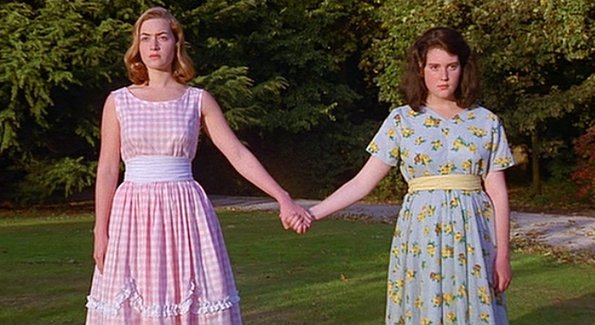
Wise: Heavenly Creatures (1994) dramatizes the notorious Parker-Hulme murder case in which two New Zealand teenagers developed an incredibly intense friendship that led to the brutal beating death of one girl's mother.
Juliet Hulme (Kate Winslet), the privileged daughter of an English academic, and Pauline Parker (Melanie Lynskey), the beetle-browed offspring of working class parents, came from very different backgrounds, but they bond over childhood illnesses and a shared love for James Mason and Mario Lanza.
Together they create an all-consuming fantasy world, and when their parents begin to worry that their fierce friendship would tip inevitably into lesbianism, plans were made to separate them. Lashing out, the girls bludgeon Pauline's mother and hope to flee to Hollywood.
Werth: It might have been easier for them to just wear tight sweaters and hang around the soda fountain.
Wise: This is the first film appearance of both Winslet and Lynskey, and it's incredible how committed they both are to their performances. Winslet is by turns fragile and venomous, already displaying the talent that has made her the darling of awards season.
And Lynskey, who has until recently been mostly confined to sidekick roles (including a long-running stint on Two and a Half Men), reveals the ferocity inside not-so-pretty girls who have something to prove.
Werth: You'd be ferocious too if you had to act with Charlie Sheen for eight years.
Wise: But it is Peter Jackson himself who does the most amazing work here. Writing the script with his longtime partner Fran Walsh, he finds the heart of the picture in the girls' friendship and not in the frenzy surrounding the trial. Plus, as director, he is somehow able to seamlessly combine period piece, fantasy film, domestic drama, and murder mystery into a beautifully integrated whole.
The film isn't about lurid details—although the scene with a brick in stocking bashing Pauline's mother's skull would turn anyone's stomach—but about the beauty and danger offered by the creative life.
Werth: Speaking of creative, I have to pick-out which flavor margarita I'm going to drink several of tonight.
Wise: Tune in next week for more salt or no-salt Film Gab!


 Former Asian silent film star Sessue Hayakawa earned an Oscar nom for his role as camp commander Colonel Saito, a cold bastard who finds his well-run deathcamp turned upside-down by Nicholson.
 Which brings me to Guinness. The ease with which Guinness portrays Nicholson is breathtaking. This career soldier's desire for rules and regulations is so deep that he will stand quoting a copy of the Geneva Convention while his captors focus a machine gun on him and his men.
 It should come off as comical how this man justifies building a bridge for the enemy so that he can keep his men's morale up. But Guinness inhabits the unbending role so completely there is no room for comedy. He rightly earned a Best Actor Oscar for making this complex character so real.