Werth: Say, Wise?
Wise: Yes, Werth?
Werth: Which of us is going to call our cable operator to subscribe to HBO so we can watch the new mini-series version of Mildred Pierce?
Wise: I assumed you were going to boycott it because they didn’t CGI Joan Crawford into it.
Werth: Well... as good as Joan would be in the new version, I am confident that Todd Haynes is going to do a beautiful job on it.
Wise: Beautiful—but not better?
Werth: Oh I’d never go that far. First of all, I don’t think that these two projects should even be compared. They are from two TOTALLY different eras and directorial styles and, to be honest, Haynes is going to be more faithful to the James M. Cain novel that was the source material for both films. Secondly, the original 1945 Mildred Pierce is a masterwork of filmmaking and performance that casts a long and unmatchable shadow.
Wise: Kate Winslet has big eyebrows to fill.

Werth: Exactly. When shooting began on Mildred Pierce in December of 1944, the film’s star, Joan Crawford, was in a very precarious position. Her reign as the queen of MGM had unceremoniously concluded a year earlier because she had been labeled box-office poison and even worse, she was approaching Tinseltown’s unacceptable feminine age of forty.
Wise: You’re going to be unacceptable soon.
Werth: Hopefully blogs are more forgiving than Hollywood. Crawford signed a deal with rival studio Warner Brothers and waited for the script offer that she hoped would put her back on top of the Hollywood heap. Crawford read Mildred Pierce and saw her opportunity, but director Michael Curtiz was initially not so keen on working with the notorious diva. He even made her audition for the part. Legend has it he ripped the shoulders of her dress from her body as he railed against shoulder pads, only to find, those were Crawford’s actual shoulders.
Wise: Curtiz would have hated 80’s fashions.

Werth: Despite Curtz’s initial doubts, after seeing the film it’s impossible to imagine anyone but Crawford in the role. Mildred Pierce tells the story of a hard-working, single mother who busts her hump as a waitress while climbing the rungs of the culinary ladder to success—all so she can provide everything she didn’t have for her daughter Veda. Played by actress Ann Blythe, Veda is like a tall, cool glass of acid. The ultimate social climber, Veda wants the finer things in life and is willing to step on anyone to achieve them, even if that means trading bitchslaps with her blindly adoring mother.
Wise: I'm gonna name my first baby Bitchslap.

Werth: Curtiz expertly blended the drama of a woman’s film with the visual styling and plot of film noir (there were no murders in Cain’s novel). The film plays a riveting tennis game between the past’s bright, sunlit kitchens and the present’s starkly shadowed police station and is full of wonderful volleying from Blythe, slimy Jack Carson and fresh as paint Eve Arden. But without a doubt, the titan that stands out in this film is Crawford. She often played determined, come-from-nowhere shopgirls who had to fight their way to the top with nothing but raw ambition—
Wise: After all, that was how Lucille LeSueur became Joan Crawford.

Werth: But something about this role is different. Crawford added nuances of vulnerability, naive motherly love, and worldly regret that made Mildred a complex and unique film character. She wasn’t just a bitch. She was a victim of social constraints and her own myopic love for her daughter. No matter how many critics, historians and feminists write about this role, Crawford defies easy definitions of the Post-WW II woman. There she stands on the steps of the courthouse at the end of the picture, a symbol of failure and possibility. Getting the last laugh at “box-office poison,” Crawford won the Academy Award for Best Actress that year and kick-started another fruitful period in her career.
Wise: You might say that Todd Haynes’ Mildred Pierce is a re-make of a movie that re-made Joan Crawford.
Werth: I’m guessing that’s your intricate segue into your favorite re-made movie.
Wise: I do love elaborate transitions, especially this week when I’m not just talking about one re-make, but two, plus the play that the original film was based on. So it’s almost like a re-make to the fourth power.
Werth: I might need a drink just to understand that.

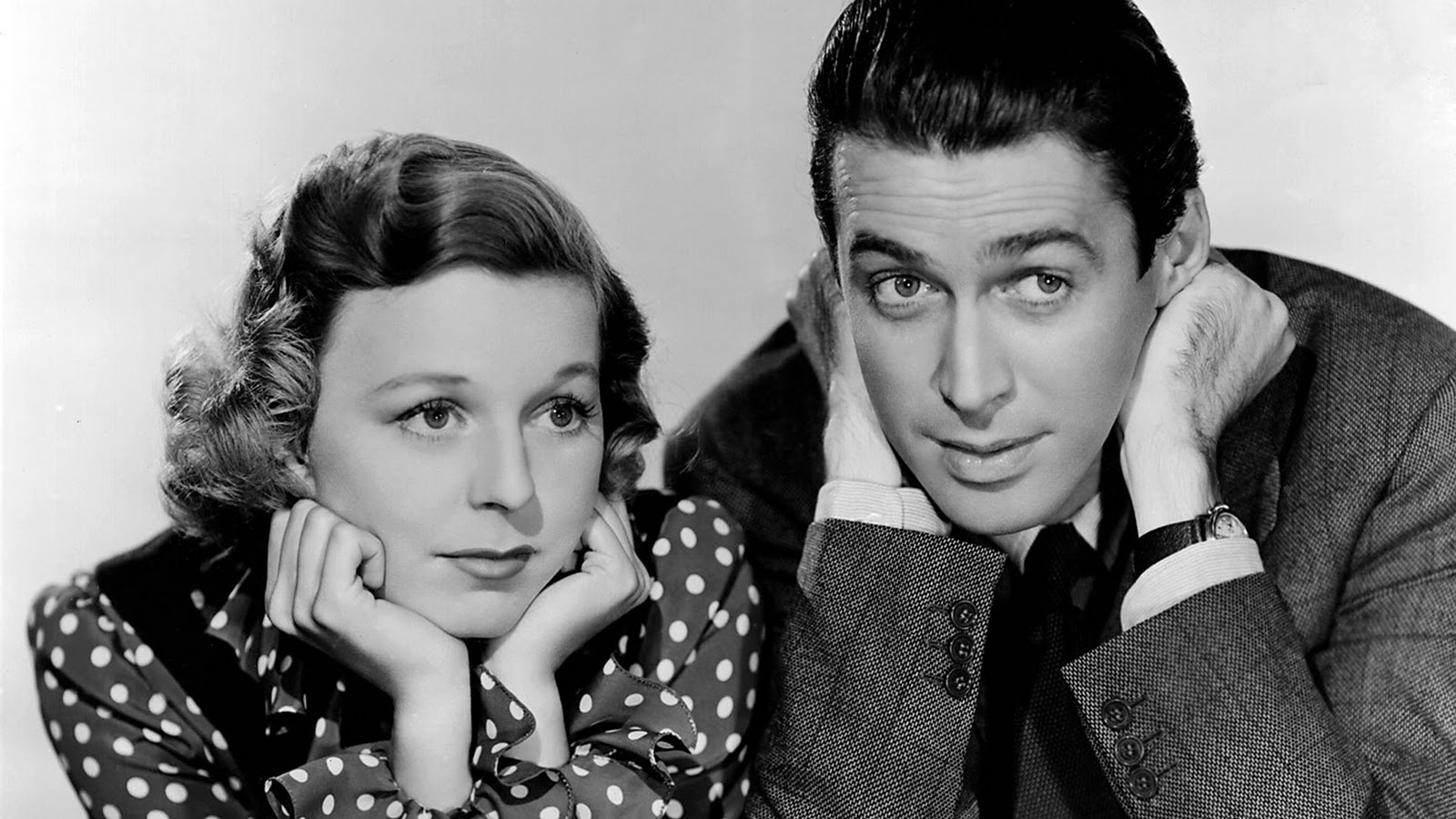
Wise: Me too. But let’s try to figure this out together. First there was 1940’s The Shop Around the Corner with James Stewart and Margaret Sullavan, directed by Ernst Lubitsch from a Hungarian play called Parfumerie. Nine years later it became a musical vehicle for Judy Garland and Van Johnson called In the Good Old Summertime directed by Robert Z. Leonard. Finally, in 1998, it became You’ve Got Mail directed by Nora Ephron and starring Tom Hanks and Meg Ryan.
Werth: The ending of You’ve Got Mail literally caused me to stand up in the theater and shout out to Meg Ryan, “Stab him!”
Wise: While The Shop Around the Corner and In the Good Old Summertime share more plot points, all three films focus on the central couple who secretly exchange anonymous love letters while they unknowingly bicker with each other in their everyday lives. What’s so interesting, though, is that despite the similarities, all three of these movies are decidedly different and they each showcase their stars in wildly different ways.
Werth: Which is a big contrast to Mildred Pierce because no matter how great Kate Winslet is in the role—and I don’t doubt she will be—she’ll never be synonymous with the part the way Joan
Crawford is.

Wise: Exactly. The Shop Around the Corner is a rueful film, something of a love letter itself to the charms of European life that were rapidly disappearing under the heels of the Nazis during WWII. Stewart and Sullavan both give tender, elegant performances under Lubitsch’s direction while preserving an undercurrent of bleakness that suggested that even the most star-crossed lovers had a chance of missing one another.
Werth: Like me and Hugh Jackman.
 Wise: Summertime has a much more rollicking tone. Judy belts out some tender and fun numbers, all while keeping an eye on Johnson’s flimfalmmery. It also features a fantastic tumble from the prince of silent pratfalls, Buster Keaton, the sweetly amusing love story between Spring Byington and S.Z. “Cuddles” Sakall, plus the screen debut of three-year-old Liza Minnelli.
Werth: I’m surprised she didn’t get her own number.

Wise: You’ve Got Mail was the third onscreen pairing of Ryan and Hanks and a lot of the plot simply vanishes to make room for their patented, and very marketable, sparring, and yet it shares a certain melancholy with Lubitsch’s original film. Ephron gives a plum role to New York’s Upper West Side, bathing it in golden light and lamenting the loss of its neighborhood feel. Ephron even does the unthinkable by closing the central shop, Ryan’s bookstore for children, even though the gift shop in Around the Corner and the music store in Summertime both survive.
Werth: It’s a tough world out there for bookstores... and books.
Wise: What makes up for it, in my mind at least, is the fact that life-long Oz fan Ephron prominently features a number of L. Frank Baum’s books in the set design.
Werth: I knew you’d bring it back to Oz somehow.
Wise: Does this mean you don’t want to hear about the planned Wizard of Oz remake?
Werth: Let’s save that for when we re-make Film Gab next week.