Friday, October 12, 2012

True to Life Film Gab

Werth: Hello, Wise.

Wise: Hello, Werth. What cinematic plans do you have for this weekend?

Werth: Well if I can recover from Film Gab favorite Chris Hill's birthday margaritas, I'd like to go see Argo.

Wise: Oh right. The new Affleck flick based on the recently declassified CIA mission to rescue U.S diplomats during the Iran hostage crisis while disguised as a Hollywood film crew.

Werth: It's perfect—real life imitating Hollywood when Hollywood has always enjoyed taking true stories and turning them into movies. But oftentimes movie-making has played fast and loose with the truth. David Lean's Oscar-winner The Bridge on the River Kwai (1957) is a perfect example of a movie that people think is based on true events—but is actually more movie magic than reality.  
Kwai tells the story of a group of WWII British POWs led by stalwart Colonel Nicholson (Alec Guinness) who endure torture and starvation in order to build a bridge for their Japanese captors.

Wise: Kind of like the last time I was at Uniqlo. 

Werth: Shears, a U.S. naval officer (the oft bare-chested William Holden) escapes and is soon leading a group of commandos to blow-up the bridge that Nicholson has taken such care to build. In typical Lean fashion, nature sets a stunning backdrop for this story of human chutzpah and conflict. 
Shot mostly in the dense jungles of Ceylon, the local flora provides a very real cage to trap these men (and actors) in. If you want to grab a bottle of water while watching Lawrence of Arabia, in Kwai you want to grab a moist towelette and a flyswatter. 
Part of Lean's genius was creating all-encompassing atmosphere by replacing sets made by man with sets designed by God.

Wise: Does God get credit for set design?

Werth: The other thing Lean did very well was choose and direct amazing actors. William Holden is as brash, smart-mouthed and rugged as ever—so American he should be made of apple pie. 
Former Asian silent film star Sessue Hayakawa earned an Oscar nom for his role as camp commander Colonel Saito, a cold bastard who finds his well-run deathcamp turned upside-down by Nicholson. 
Which brings me to Guinness. The ease with which Guinness portrays Nicholson is breathtaking. This career soldier's desire for rules and regulations is so deep that he will stand quoting a copy of the Geneva Convention while his captors focus a machine gun on him and his men. 
It should come off as comical how this man justifies building a bridge for the enemy so that he can keep his men's morale up. But Guinness inhabits the unbending role so completely there is no room for comedy. He rightly earned a Best Actor Oscar for making this complex character so real.

Wise: So what about the movie isn't true?

Werth: Try most of it. There was a bridge built by British POWs over the Mae Klong River (Thailand) in 1943, but that's where the similarities end. In fact, when the movie was originally released, veterans who worked on the bridge were fairly upset at the depiction, pointing out that there was no whistling in their camp, and the real-life Col. Nicholson, Phillip Toosey, actually worked to sabotage the bridge instead of building one he could be proud of.

Wise: Long before Peter Jackson was corralling Hobbits or remaking the greatest monkey pic from the Golden Age of Hollywood, he was busy examining the inner lives 1950's teenage girls.  

Werth: Something he has in common with Errol Flynn.  

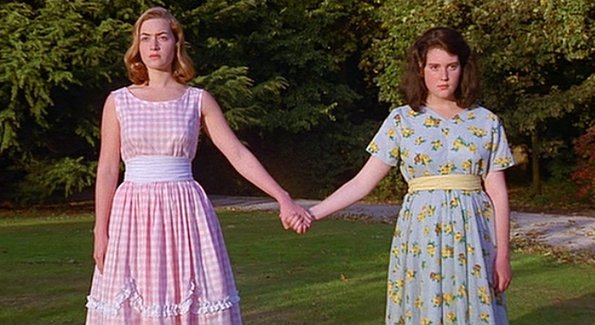
Wise: Heavenly Creatures (1994) dramatizes the notorious Parker-Hulme murder case in which two New Zealand teenagers developed an incredibly intense friendship that led to the brutal beating death of one girl's mother.  

Juliet Hulme (Kate Winslet), the privileged daughter of an English academic, and Pauline Parker (Melanie Lynskey), the beetle-browed offspring of working class parents, came from very different backgrounds, but they bond over childhood illnesses and a shared love for James Mason and Mario Lanza.  
Together they create an all-consuming fantasy world, and when their parents begin to worry that their fierce friendship would tip inevitably into lesbianism, plans were made to separate them.  Lashing out, the girls bludgeon Pauline's mother and hope to flee to Hollywood.  

Werth: It might have been easier for them to just wear tight sweaters and hang around the soda fountain.
 
Wise: This is the first film appearance of both Winslet and Lynskey, and it's incredible how committed they both are to their performances.  Winslet is by turns fragile and venomous, already displaying the talent that has made her the darling of awards season.  
And Lynskey, who has until recently been mostly confined to sidekick roles (including a long-running stint on Two and a Half Men), reveals the ferocity inside not-so-pretty girls who have something to prove.  

Werth: You'd be ferocious too if you had to act with Charlie Sheen for eight years.

Wise: But it is Peter Jackson himself who does the most amazing work here.  Writing the script with his longtime partner Fran Walsh, he finds the heart of the picture in the girls' friendship and not in the frenzy surrounding the trial.  Plus, as director, he is somehow able to seamlessly combine period piece, fantasy film, domestic drama, and murder mystery into a beautifully integrated whole. 
The film isn't about lurid details—although the scene with a brick in stocking bashing Pauline's mother's skull would turn anyone's stomach—but about the beauty and danger offered by the creative life.

Werth: Speaking of creative, I have to pick-out which flavor margarita I'm going to drink several of tonight.

Wise: Tune in next week for more salt or no-salt Film Gab!


Wednesday, October 10, 2012

Mongo Say Bye-Bye

Dear Film Gabbers, it is with a heavy heart that we here at Film Gab bid adieu to someone very near and dear to us. Football player and character actor Alex Karras has passed away at the age of 77. While many might think of him as Webster's dad from the diminutive 80's television hit, or the horse-punching cretin Mongo from Blazing Saddles (1974), he was especially memorable to many of us 80's gays as the burly Chicago bodyguard Squash Bernstein who dares to be himself and come out of the closet in the beloved gender-bending comedy Victor Victoria (1982).  
Although built like a bear, Karras' characters always wound up exposing their lovable side, making him one of those unexpected joys to watch. Here's to you and Toddy sharing some champagne in Heaven!

Monday, October 8, 2012

The Creature is in 3D!

This Friday, Film Forum is playing one of the greatest monster classics in eye-popping 3D! 1954's Creature from the Black Lagoon has long been considered one of the great Saturday matinee monster movies that delighted and terrified the kid in us all. Of course Julie Adams' tight white bathing suit and the puffed-out exposed chests of Richard Carlson and Richard Denning appealed to a slightly older audience. But either way, Creature is one of those films that despite its clunky monster suit, inspired a generation of horror film makers and fans alike. So go see it! You may never swim in the Amazon again...


Friday, October 5, 2012

Stop Motion Burton

Werth: Hello, Wise.  

Wise: Howdy, Werth.  Do you happen to know if there's a Hot Topic here in Manhattan, or do I need to head to a mall somewhere in New Jersey?  

Werth: Are you all out of black nail polish and fishnet tights?  

Wise: Of course not, but I do need some supplies to get my goth fangirl on because Tim Burton's latest stop-motion animation film Frankenweenie opens today. This calls for a new Emily the Strange lunchbox!

Werth: More than that, Wise.  It calls for a Film Gab salute to the multiple stop-motion animated films in Burton's oeuvre. 

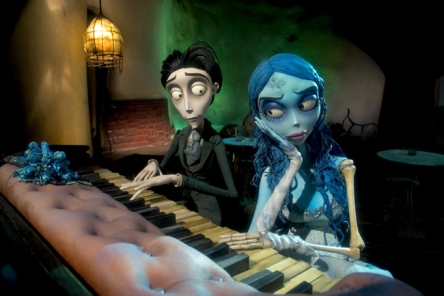
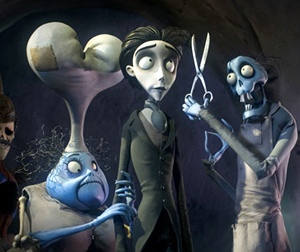
Wise: I couldn't agree more.  Corpse Bride (2005) relates the unlikely tale of Victor Van Dort (Johnny Depp), the shy son of arriviste fish merchants who is pledged to marry the daughter of a titled but broke noble family (Emily Watson as a very plucky Victoria Everglott) only to have those plans interrupted by an accidental union with the titular decomposing lady (Helena Bonham Carter).  
The plot revolves around Victor's attempts to escape the underworld and reunite with his true love Victoria while Corpse Bride Emily attempts to persuade Victor of the many charms of the afterlife. 


Werth: Sounds like the presidential debate this week. 

Wise: The film marks Burton's first time as the director of a full-length stop-motion animation film (along with co-director Mike Johnson).  
In some ways, the format seems the perfect outlet for Burton's imagination—stylized puppets sing and emote in an endearingly creepy, toy-like fantasy world—but it's also a reminder of the kind of compassionate filmmaker he can be. Unlike the high-concept pageantry without a shred of human emotion in a live-action film like Alice in Wonderland, the heart of Corpse Bride focuses on hopes and disappointments, tragedy, trickery, despair and love.  
Plus, there's genuine humor, including Emily's maggot conscience that bears a striking resemblance to Peter Lorre. 


Werth: Everyone should have a Peter Lorre maggot as a conscience.

Wise: Depp is marvelous as a self-doubting introvert who gradually learns to express his emotions and to fight for his passions.  Watson has less to do, but is no less appealing as a damsel in distress who finds she has a lot more fortitude than anyone gave her credit for. 
Bonham Carter resurrects some of the spunky innocence she displayed as an ingenue in all those Merchant and Ivory films at the beginning of her career, but marries it to a macabre sexpot glamor that makes her the darling of the black eyeliner set.  

Werth: I bet her wardrobe at home looks more like the Corpse Bride's than Miss Honeychurch's.

Wise: Of course, no discussion of Corpse Bride would be complete without mentioning Danny Elfman's rollicking score.  He somehow manages to make his music appropriate to both Burton's gaudy Halloween world and to the characters' emotional lives.  He also provides the singing voice to Mr. Bonejangles, a one-eyed dancing skeleton (and a sly nod to Sammy Davis, Jr).  
The supporting players are uniformly great, filled with a roster of British talent that includes Joanna Lumley, Richard E. Grant, Michael Gough, and Christopher Lee.  But it's all these talents together, harnessed by Burton and Johnson that makes Corpse Bride such a pleasure.  

Werth: Frankenweenie and Corpse Bride may be his most recent forays into the world of stop-motion animation, but Burton has been working in the world of puppets and clay from his first days as a director. One of his first shorts made for Disney which you can catch on the Special Edition DVD of The Nightmare Before Christmas (1993) (which Burton produced but didn't direct) shows exactly where this talented artist was going. Vincent (1982) is a darkly charming, black and white animated poem about a young boy named Vincent Malloy who wishes he was Vincent Price.

Wise: Like Bill Hader wishes he was Vincent Price.

Werth: Minus Gloria Swanson and James Mason. Vincent's imagination is a joyous trip into the macabre with little Vincent turning his mom into a waxwork, scouring dark alleys with his zombie dog, and realizing that his wife has been buried alive... all to narration spoken with a twinkle of irony by the one and only Vincent Price.

Wise: I guess Orson Welles was busy. 

Werth: What really makes this piece so unique is its impeccable design, which Burton did himself. The textures of the clothing and hair, the wild expressionism-by-way-of-Dr. Seuss sets, the cinematic lighting, even the little bags under Vincent's eyes are created with painstaking attention to detail. 
All of these qualities would make their way into Burton's stop-animation scenes in Pee-Wee's Big Adventure (1985) and Beetlejuice (1988) and his visionary production of The Nightmare Before Christmas (1993) and James and the Giant Peach (1996) (both directed by Coraline director, Henry Selick.)
 
Wise: So, Werth, I've got my ironic My Little Pony t-shirt and my wallet chain, and I'm ready join you at Frankenweenie. 

Werth: Who cares what you're wearing, as long as you join me next week for more Film Gab.


Friday, September 28, 2012

Sweet Dreams Are Made of Gilliam

Wise: Hello, Werth.

Werth: Hi, Wise. Have you ever been haunted by a dream?

Wise: Only when someone desecrates the Eurythmics. 

Werth: I had a dream the other night about hanging out in a bar with Bernadette Peters, Burt Reynolds, and George Takei.

Wise: Have you been mixing leisure suits with Harvey Wallbangers again?

Werth: I don't think it was what I drank, but what I saw before I went to bed that goosed up my dream-world. Tuesday night Film Forum screened the Terry Gilliam cult-favorite Brazil (1985). I have heard about this film for years, but I really wasn't prepared for the reality-bending, dystopic vision quest I was about to embark on. 
Sam Lowry (Jonathan Pryce) is a petty paper-pusher in an Orwellian bureacracy "somewhere in the 20th century" who begins to have Barbarella-like dreams about rescuing a beautiful woman (C.H.U.D. alumna Kim Greist). 
While delivering a refund check to a woman whose husband was tortured to death by mistake, Lowry sees the girl he's been dreaming of and can't help but pursue her.

Wise: Just not pursue in the Lifetime movie way.  

Werth: The plot quickly ratchets up to include terrorist bombings, a promotion, a seditious air-conditioning repair man (Robert De Niro), a sword fight with a giant samurai, and a face-lift obsessed mother (Katehrine Helmond) who wears hats shaped like high-heel shoes.

Wise: It sounds like Zsa Zsa's dream diary.

Werth: Indeed. Gilliam's ability to make the film's "reality" so fantastical that you can't tell what's real in this world and what's not soaks the film in a dream-like quality that alternates between whimsy and nightmare. Gilliam mines the visual motifs of film noir, art deco, traditional Japanese art, wholesome '50's propaganda and industrial grunge to come up with stunning vistas, posh restaurants and dark alleys where Lowry is forced to fight the sytem to save his girl and himself. 
Oscar-nommed production designer Norman Garwood must have had a field day turning the images in Gilliam's head into physical sets and matte paintings of cityscapes, dreamworlds, and ghettos. One particular car chase scene is notable because it's hard not to accuse Tim Burton of stealing its look for one of the Batmobile chase scenes in Batman (1989).

Wise: We call it homage.

Werth: Gilliam himself creates an homage to the famous Eisenstein Battleship Potemkin "massacre on the steps" scene during Lowry's escape from work/prison, so it's clear that he is purposefully referenicng the worlds created by the cinema.
The whole film is so visually rich with cultural code and imaginative spaces and a plethora of top-notch actors including Pryce, De Niro, Helmond, Ian Holm, Michael Palin, Bob Hoskins and an early slimy screen appearance by Jim Broadbent—that it's overwhelming. 
With a plot that keeps going and going, accompanied by an ever-changing refrain of the famous Ary Barrosso song—Brazil is like a twisting nightmare that refuses to end. But it's a dream that I would welcome any night. 

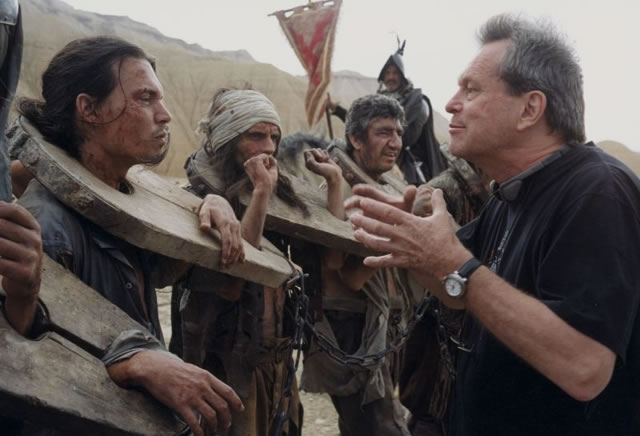
Wise: Terry Gilliam is a master of bringing dream visions to the screen.  Unfortunately, that genius can sometimes devolve in nightmare.  The documentary Lost in La Mancha (2002) chronicles Gilliam's failed attempt to bring Cervantes' classic Don Quixote to the multiplex.  

Werth: Which was also a failed project that plagued Orson Welles.

Wise: Ever since a dispute with a producer hobbled the production of The Adventures of Baron Munchausen (1988), Gilliam has allowed documentarians onto his sets to help combat the (unfair) perception that his playful production style leads inexorably toward bloated fiascoes.  
In the case of La Mancha, the desire to appear responsible may have led to disaster because the tight budget and even tighter shooting schedule ultimately could not withstand the catastrophes that plagued the project.  Unable to gather his actors for rehearsal before the start of filming, Gilliam spends most of his pre-production time encouraging his team to be both whimsical and mindful of the budget.  
When the first day of filming does arrive, momentum is slow to build as the cast attempts to cohere, then comes to a complete halt when NATO jets running maneuvers drown out the sound followed by a flash flood that sweeps away the set.  

Werth: Top Gun meets Waterworld!

Wise: The problems mount until Gilliam's Quixote, French film legend Jean Rochefort, sustains an injury that forces him to drop out of the cast.  The production team decides to shelve the project, but the film's insurers refuse to pay the claim, forcing Gilliam to continue making a film that can no longer be completed until the producers and the insurers reach an agreement.  

Werth: Which sounds like the plot to a Terry Gilliam film.

Wise: It's hard to know what we've lost by not having the completed picture.  The rushes included are arresting (particularly a shot of three giants lumbering over a mountain), although without context.  

Johnny Depp does some fun mugging as a revamped Sancho Panza, but mostly he sits at the edge of the set smoking and watching disaster unfold.  The best indication of what might have been is the delight that 
Gilliam takes in the creations of his production team: he battles a phalanx of life-sized marionettes and predicts Oscars for his costume designer Gabriella Pescucci.  There have been occasional rumors of Gilliam reviving the project in the decade since the documentary appeared, but so far all attempts seem to be mere tilting at windmills.  

Werth: So, Wise, has our salute to Terry Gilliam inspired any new dreams for you?  

Wise: Well, aside from White Christmases and Jeannies, I'll be dreaming of next week's Film Gab.