
Monday, November 5, 2012
IMDb's Top 250 in 2 1/2


Friday, November 2, 2012
Stormy Weather

Wise: Hey, Werth. How come you have a five-day beard and your hair looks like a before picture from a Wen Hair Care infomercial?
Werth: Because unfortunately due to the wrath of Hurricane Sandy, I still don't have electricty.
Wise: That stinks, Werth.
Werth: But still, there are those who lost much more than I have in the storm.
Wise: True, true. Our thoughts go out to all those who lost power, property and loved ones.


Wise: In Hollywood, you're only as good as your last compromise.

Wise: Geena Davis makes it to DVD, but Gershwin doesn't?


Werth: Twister wasn't a total disaster area. There were some lovely close-ups on Cary Elwes and his lips.

Werth: Crispin Glover invented fey creepiness.

Werth: Kansas basements are great for frustrating confrontations.

Werth: Speaking of things not to be missed, everyone should tune in next week for a less stormy Film Gab.
Wise: And hopefully Werth will look less like Tom Hanks in Castaway.

Friday, October 26, 2012
Film Gab's Leading Ladies

Werth: Good day, Wise. Have you finished signing our birthday card to Hillary Clinton?
Wise: I got distracted by one of those memes of her texting in sunglasses.
Werth: I really enjoy watching her strut through press conferences in her power pantsuits. But then I've always found women in politics exciting—especially if they are women in politics in the movies!

Wise: Wouldn't a pot roast have been easier?


Wise: That sounds like Bayonne to me.


Werth: Sounds like a political gangbang.

Werth: There must be a Hillary film in the works. Notting Hill-ary?


Werth: Hamburger Hill-ary.


Werth: The Englishman Who Went Up a Hill-ary But Came Down a Mountain.
Wise: Tune in to Film Gab next week when hopefully Werth will have run out of spoof Hillary movie titles.
Werth: The House on Haunted Hill-ary!

Friday, October 19, 2012
Kate's Closet

From The New York Times' write-up of the show:
Organized by the Kent State University Museum, which acquired her performance clothes (as well as personal items like khakis, shoes and makeup) after her death in 2003, “Katharine Hepburn: Dressed for Stage and Screen” includes more than 40 costumes and other pieces she wore in plays and movies like “The Philadelphia Story,” “Adam’s Rib” and “Guess Who’s Coming to Dinner.” Also on display are letters, scripts and research notes that Hepburn made, and which are part of the library’s collection of her stage papers.If your travel plans don't include the Big Apple, you can still pick up the accompanying book with essays by the curators discussing this iconic star and and her equally famous wardrobe.
Escape from New York!
Wise: Hello, Werth.
Werth: Hi, Wise. What's with the mega-jumbo-latte and the Times' real estate section?
Wise: My insomnia has been acting up lately, and I've been fantasizing about a boondock cottage somewhere I can catch up on sleep.
 Werth: One thing all New Yorkers have in common is the urge to sprint for the nearest railroad station to catch a train to our favorite out-of-town refuge whenever New York City life gets a little too... well, New York City.
 Wise: Based on Peter Cameron's novel, The Weekend (1999) follows Lyle (David Conrad) as he and his new (and much younger) boyfriend Robert (James Duval) flee New York City for a quiet getaway at the upstate home of his old friends Marian and John (Deborah Kara Unger and Madmen's Jared Harris). Unfortunately, the weekend retreat turns out to be anything but quiet as long held frustrations, sorrows and resentments begin to surface, particularly Marion's complicated feelings for Lyle's deceased partner Tony (D.B. Sweeney).
Werth: She obviously watched The Cutting Edge one too many times.
 Wise: Adding to the tumult is their glamorous but sharp-tonged neighbor Laura Ponti (Gena Rowlands), her snappish actress daughter Nina (Brooke Shields), and Nina's married lover Thierry (Gary Dourdan). Despite the large cast, the film is composed mostly of small scenes between pairs of characters, interspersed occasionally with blued-tinged flashbacks to Tony's past bons mots that feel something like an old Calvin Klein fragrance ad.
Werth: Don't you mean like an old Calvin Klein jeans ad?
 Wise: I have to admit that I've avoided this film for over a decade because the novel it's based on is one of my favorites, and I was worried that Cameron's treasure box could only be butchered onscreen. And it turns out that I was only half right. Writer/director Brian Skeet has an instinctive feel for the rhythms of Cameron's prose, capturing the languorous feeling of the country after escaping the fetid heat of the city. If anything, he's perhaps too respectful of Cameron's words, cramming in entire passages of dialogue that feel spare within the expanse of a novel, but overblown on film.
Werth: Show it, don't say it, Skeet!
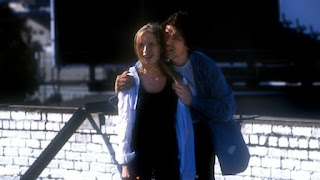 Wise: Still, Skeet gets a lot more more right than wrong. He is not slavishly faithful to his source, adapting and enriching the more cinematic parts of the book, eliding the rest. The cast is almost uniformly excellent, particularly Rowlands, who is at the center of the most lively scenes, and Unger, who manages to portray both her character's unlikability and her emotional frailty. Less successful is Sweeney who is forced to play more of a symbol than a character and whose Long Island inflection makes a stark contrast to Tony's platitudinousness while being posed like The Dying Gaul.
 Werth: At the beginning of Billy Wilder's The Lost Weekend (1945) the main character is also packing for a trip to the country to get away from New York City. But Don Birnam (Ray Milland) quickly decides that instead of leaving by way of Metro North, he will take his usual escape route through a bottle of rye. You see, Don is a raging alcoholic.
Wise: Which is a lot cheaper than a house in the Hamptons.
 Werth: Don handily ditches his well-meaning brother Wick (Phillip Terry, who at the time was spoused up with Joan Crawford) and his "best girl," the ritzy Helen St. James (the doe-eyed Jane Wyman wearing leopard courtesy of Edith Head) and begins a four day drinking binge that would put Mel Gibson to shame.
 Before the film is done, Don is kicked out of his favorite bar, installed in a drunk tank, and roams up and down Third Avenue looking for a pawn shop that is open on Yom Kippur.
Wise: Clearly he should be taking the Day of atonement a bit more seriously.
 Werth: Before its treacly ending, Lost Weekend is a disturbing look at how the mind of an alcoholic works—or doesn't work. Milland doesn't play for sympathy, his silky, gentlemanly demeanor turning into a web of disgusting lies, selfishness and criminality as he descends into a gin-fueled spiral. But because he's Ray Milland, we also can't bring ourselves to hate this jerk. He knows how pathetic he is, he is just powerless to stop himself from pursuing the next drink.
 Wilder works his typical magic with story rather than a flashy cinematic style, but he does take the time to have fun with closeups on a booze-filled shot glass, water rings on the bar, and a DT fantasy with a bat and a mouse that is laughable until it's not.
 The film made quite an impact when it was released—winning four Oscars including Best Picture, Best Director and Best Actor for Milland—but perhaps the most definitive proof of its popularity is that two years later the film was spoofed in the Bugs Bunny cartoon "Split Hare".
Wise: What's up, Drunk?
Werth: Whether you're packing your bags, or blacking out, join us next week for more Film Gab!

Werth: Hi, Wise. What's with the mega-jumbo-latte and the Times' real estate section?
Wise: My insomnia has been acting up lately, and I've been fantasizing about a boondock cottage somewhere I can catch up on sleep.


Werth: She obviously watched The Cutting Edge one too many times.

Werth: Don't you mean like an old Calvin Klein jeans ad?

Werth: Show it, don't say it, Skeet!


Wise: Which is a lot cheaper than a house in the Hamptons.


Wise: Clearly he should be taking the Day of atonement a bit more seriously.


Wise: What's up, Drunk?
Werth: Whether you're packing your bags, or blacking out, join us next week for more Film Gab!

Friday, October 12, 2012
True to Life Film Gab
Werth: Hello, Wise.
Wise: Hello, Werth. What cinematic plans do you have for this weekend?

Wise: Oh right. The new Affleck flick based on the recently declassified CIA mission to rescue U.S diplomats during the Iran hostage crisis while disguised as a Hollywood film crew.


Wise: Kind of like the last time I was at Uniqlo.


Wise: Does God get credit for set design?
Werth: The other thing Lean did very well was choose and direct amazing actors. William Holden is as brash, smart-mouthed and rugged as ever—so American he should be made of apple pie.
 Former Asian silent film star Sessue Hayakawa earned an Oscar nom for his role as camp commander Colonel Saito, a cold bastard who finds his well-run deathcamp turned upside-down by Nicholson.
 Which brings me to Guinness. The ease with which Guinness portrays Nicholson is breathtaking. This career soldier's desire for rules and regulations is so deep that he will stand quoting a copy of the Geneva Convention while his captors focus a machine gun on him and his men.
 It should come off as comical how this man justifies building a bridge for the enemy so that he can keep his men's morale up. But Guinness inhabits the unbending role so completely there is no room for comedy. He rightly earned a Best Actor Oscar for making this complex character so real.


Wise: So what about the movie isn't true?


Werth: Something he has in common with Errol Flynn.
Wise: Heavenly Creatures (1994) dramatizes the notorious Parker-Hulme murder case in which two New Zealand teenagers developed an incredibly intense friendship that led to the brutal beating death of one girl's mother.
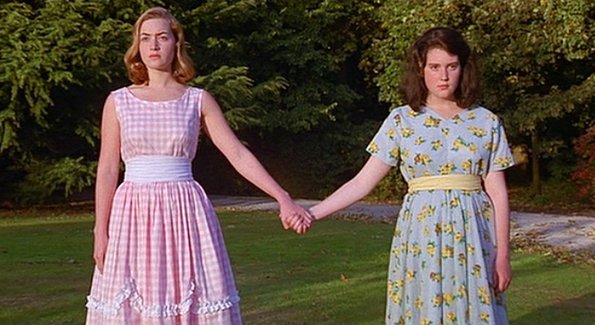

Werth: It might have been easier for them to just wear tight sweaters and hang around the soda fountain.


Werth: You'd be ferocious too if you had to act with Charlie Sheen for eight years.


Werth: Speaking of creative, I have to pick-out which flavor margarita I'm going to drink several of tonight.
Wise: Tune in next week for more salt or no-salt Film Gab!


Subscribe to:
Posts (Atom)